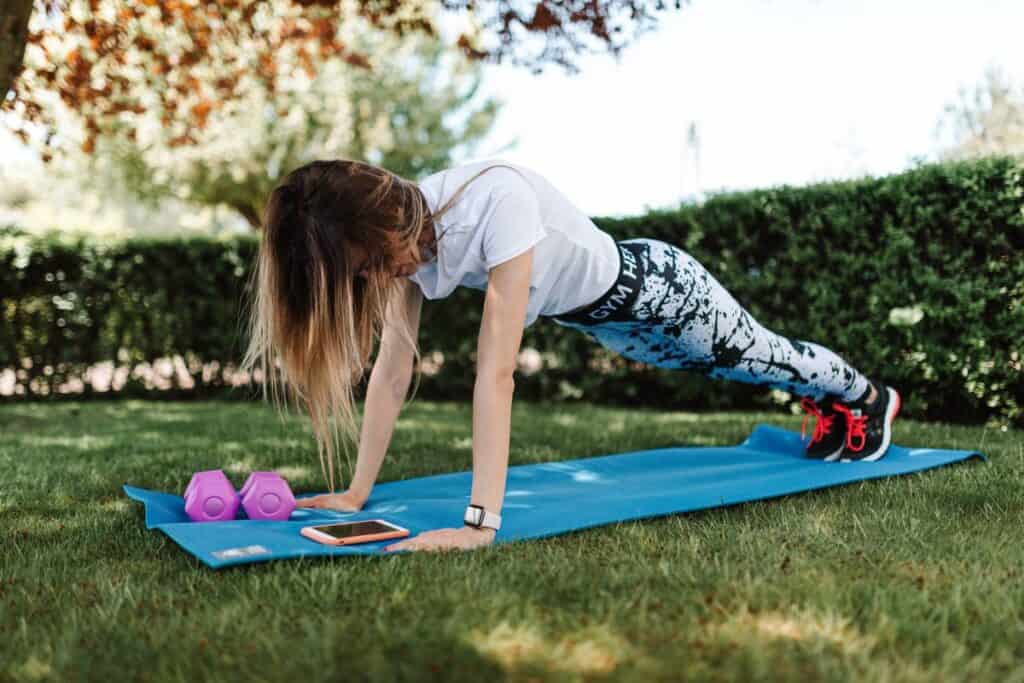
Not everyone has the time, budget, or inclination to join a gym, and that’s perfectly fine. Some of the most effective training tools available to you weigh nothing, cost nothing, and are already attached to your body: your own muscles working against gravity. Bodyweight training — squats, push-ups, lunges, planks, and their countless variations — has been used to build serious strength and conditioning for as long as humans have exercised, long before dumbbells and machines existed.
This guide is built for people with genuinely limited time and no interest in buying equipment. It covers why bodyweight training works, how to structure a week of home workouts, specific routines you can start today, and how to keep progressing even without adding external weight.
Why Bodyweight Training Works
The core principle behind any form of strength training — progressive overload — doesn’t require external weights to apply. Your own body provides more than enough resistance to build significant strength, especially for beginners and intermediate exercisers, through a combination of leverage changes, tempo adjustments, unilateral (single-limb) variations, and increased range of motion.
Research comparing bodyweight training to weighted resistance training has generally found that, when taken to a similar level of effort, both produce comparable strength and muscle gains, particularly for people newer to training. The differences become more relevant at very advanced levels of strength, where external load becomes necessary to keep providing sufficient challenge — but the vast majority of people never train long enough or intensely enough to hit that ceiling.
Beyond muscle and strength, bodyweight training also builds functional movement patterns, balance, and body control that translate directly into everyday activities and sports performance in ways that some machine-based exercises don’t.
The Case for Home Workouts
No commute time. Eliminating the trip to and from a gym can be the difference between fitting in a workout and skipping it entirely on a busy day.
No cost. A gym membership is a recurring expense; a living room floor is free.
Total flexibility. You can train at 6 a.m. or 10 p.m., in ten-minute chunks or one longer session, without waiting for equipment.
Lower intimidation factor. For many beginners, especially those newer to exercise, training in a private space removes a significant psychological barrier to getting started.
Easy to combine with a busy schedule. Short, effective bodyweight circuits can be slotted into a lunch break, done while watching TV, or split into morning and evening mini-sessions.
Core Bodyweight Movements Everyone Should Know
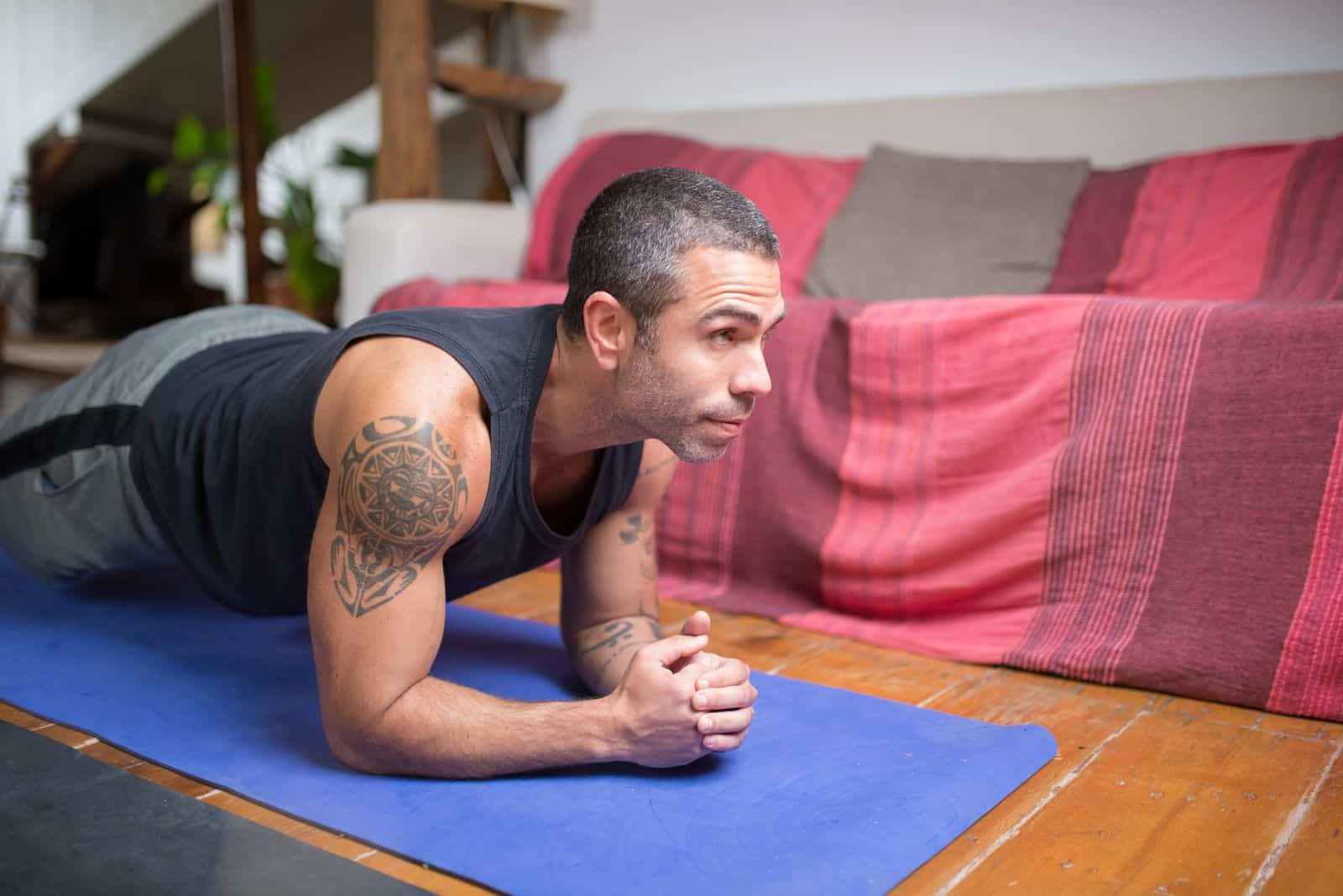
A well-designed home workout program, like any strength program, should hit each of the fundamental movement patterns.
Squat pattern: Bodyweight squats, split squats, lunges Hinge pattern: Glute bridges, single-leg deadlifts (using balance rather than weight for resistance) Push pattern: Push-ups (standard, incline, decline, or knee-supported) Pull pattern: Inverted rows using a sturdy table, doorframe rows, or towel rows Core/anti-rotation: Planks, side planks, dead bugs, bird dogs Carry/loaded walk equivalent: Farmer’s walk substitutes like high-knee marches or lateral shuffles under time
Sample Full-Body No-Equipment Workout
This routine takes about 25 to 35 minutes and can be done two to four times per week on non-consecutive days.
Warm-up (5 minutes): Marching in place, arm circles, bodyweight squats, torso twists
Main circuit (perform each exercise for the listed reps, resting 30–60 seconds between exercises, repeat the full circuit 3 times):
- Bodyweight squats — 15–20 reps
- Push-ups (any variation matching your current level) — 8–15 reps
- Reverse lunges — 10–12 reps per leg
- Inverted rows or doorframe rows — 8–12 reps
- Glute bridges — 15–20 reps
- Plank — 30–45 second hold
- Mountain climbers — 20 total reps
Cool-down (5 minutes): Static stretching for hamstrings, quads, chest, and shoulders
Making Bodyweight Exercises Harder as You Progress
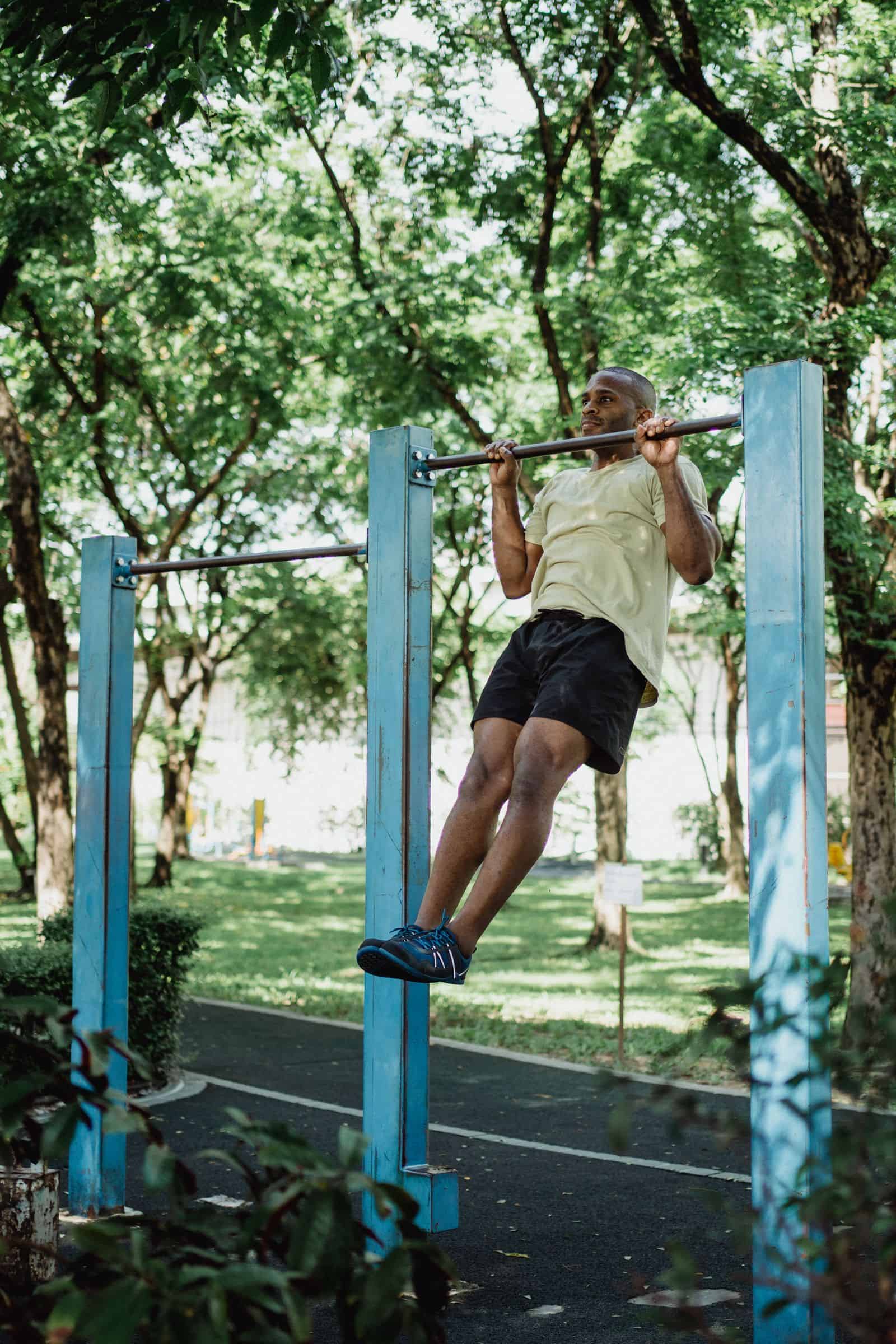
One of the most common questions about home workouts is how to keep progressing once basic movements start to feel easy. Several strategies work well without any equipment:
Increase repetitions or sets. The simplest form of progression — add reps until a target number becomes achievable with good form, then add another set.
Slow down the tempo. A push-up performed with a 3-second lowering phase is meaningfully harder than one performed quickly, increasing time under tension for the working muscles.
Add pauses. Pausing for one to two seconds at the hardest point of a movement (the bottom of a squat or push-up) increases difficulty significantly.
Reduce rest time between sets, which increases the metabolic demand of a workout even if the individual exercises stay the same.
Change leverage. Elevating your feet during a push-up, or moving from a two-legged to a single-legged variation of a squat or bridge, dramatically increases the resistance your muscles must overcome.
Add single-limb variations. Pistol squats, single-leg glute bridges, and single-arm plank variations challenge stability and strength simultaneously and can substitute effectively for added external weight.
Incorporate plyometrics. Once foundational strength is established, explosive variations like jump squats or plyometric push-ups add a power component that basic bodyweight strength work doesn’t provide.
A Sample Progression Path for Push-Ups
Push-ups are a great example of how bodyweight exercises can scale from true beginner to advanced:
- Wall push-ups
- Incline push-ups (hands on a couch, chair, or countertop)
- Knee push-ups
- Standard push-ups
- Slow-tempo push-ups (3–4 second lowering phase)
- Deficit push-ups (hands elevated slightly on books or blocks for increased range of motion)
- Decline push-ups (feet elevated)
- Archer push-ups (shifting weight predominantly to one arm)
- One-arm push-up progressions
Most people can move through several of these stages within a few months of consistent practice, which illustrates how much room for progression exists without ever picking up a weight.
A Weekly No-Equipment Training Schedule
Option A: Three Days Per Week (Great for Beginners) – Monday: Full-body circuit (as outlined above) – Wednesday: Full-body circuit – Friday: Full-body circuit – Other days: Rest, walking, or light stretching
Option B: Four Days Per Week (Upper/Lower Split) – Monday: Upper body focus (push-ups, rows, planks, tricep dips using a chair) – Tuesday: Lower body focus (squats, lunges, glute bridges, calf raises) – Wednesday: Rest or light cardio – Thursday: Upper body focus – Friday: Lower body focus – Weekend: Rest or optional light activity
Option C: Short Daily Sessions (For Very Busy Schedules) – 10–15 minutes daily, rotating between upper body, lower body, and core-focused mini-circuits, which can be more sustainable for people who struggle to find longer blocks of time but can consistently find short ones.
Adding Cardio Without Equipment
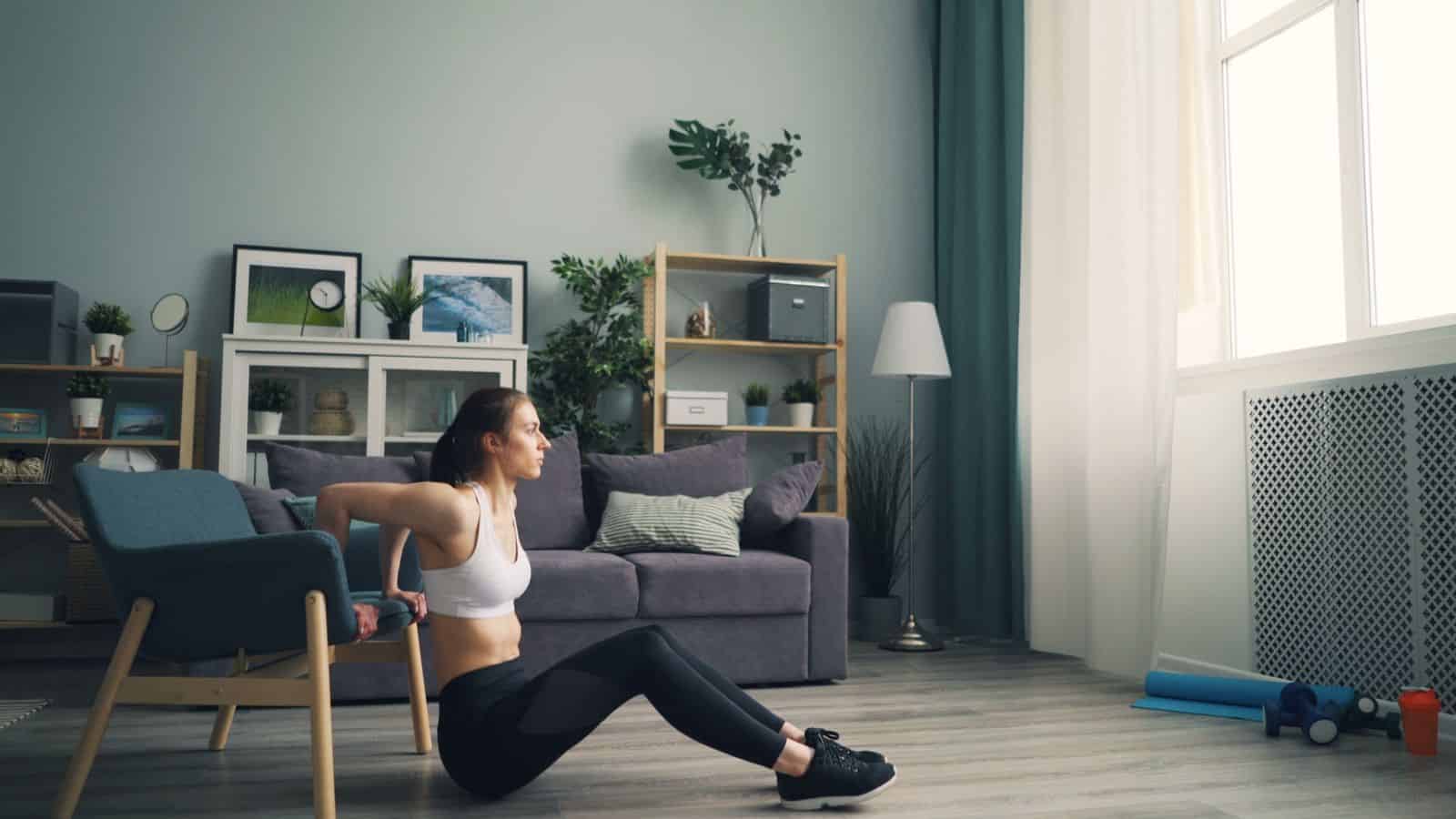
Bodyweight strength training pairs naturally with equipment-free cardio options:
- Jumping jacks
- High knees
- Burpees
- Mountain climbers
- Jump rope (a jump rope is inexpensive but genuinely optional; shadow jumping without a rope works too)
- Stair climbing, if stairs are available
- Brisk walking or jogging outdoors
A simple equipment-free HIIT format is 30 seconds of work followed by 30 seconds of rest, repeated for 10 to 15 rounds, rotating through three or four of the exercises above.
Common Mistakes in Home Workouts
Skipping progressive overload entirely. Doing the exact same routine at the exact same difficulty for months leads to plateaus. Apply the progression strategies above consistently.
Rushing through reps. Bodyweight exercises are only as effective as the control and range of motion behind them; fast, sloppy reps reduce the training stimulus significantly.
Neglecting the back and posterior chain. It’s easy to focus disproportionately on push-ups and ignore rowing and hip-hinge movements, creating muscular imbalances over time. Make a deliberate effort to include pulling and hinging exercises.
Training in a distraction-heavy environment. Because there’s no gym structure imposing focus, it’s easy for home workouts to become half-hearted. Setting a dedicated time, putting your phone aside, and treating the session with the same seriousness as a gym workout meaningfully improves results.
Assuming bodyweight training has a low ceiling. Advanced bodyweight athletes, including gymnasts and calisthenics practitioners, achieve levels of strength and muscle development that rival or exceed many weight-room regulars, illustrating just how much capacity this style of training has when progressed thoughtfully.
Most of these mistakes show up not because someone is being careless, but because they are new to training without a coach or mirror correcting their form in real time. It is common to see someone doing dozens of half-range push-ups and feeling proud of the number, when ten full-range reps would have done more for their strength. Recording a short video of yourself on your phone and comparing it to a reliable tutorial is a simple, free way to catch most of these issues early.
When You Might Want to Add Minimal Equipment
While this guide focuses on true no-equipment training, a small, inexpensive addition or two can expand your options considerably if you decide to invest later:
- A set of resistance bands (lightweight, affordable, and useful for adding load to rows, presses, and squats)
- A pull-up bar that mounts in a doorframe, which opens up genuine pulling exercises beyond rows
- A yoga mat for comfort during floor exercises and stretching
None of these are required to get meaningful results from the routines in this guide, but they’re worth considering if you find yourself enjoying home training and want more variety over time.
A Sample Four-Week Home Workout Progression Plan
Beginners often ask not just what exercises to do, but how to structure their first month so it builds real momentum instead of fizzling out after a week or two. Here’s a practical four-week starting plan using Option A (three days per week) from above.
Week 1: Learning the Movements. Focus entirely on technique rather than intensity. Perform each exercise in the full-body circuit for 2 rounds instead of 3, using easier variations where needed (knee push-ups instead of standard push-ups, for example). The goal this week is to become comfortable with the movement patterns and to notice which exercises feel hardest, since those are often the ones that reveal weaker muscle groups worth extra attention.
Week 2: Building the Habit. Increase to the full 3 rounds of the circuit. Keep the same exercise variations as week 1 if they still feel appropriately challenging. This is also a good week to add 10 minutes of equipment-free cardio, such as brisk walking or a short jumping-jack and high-knee circuit, on one or two of your rest days.
Week 3: Increasing the Challenge. For any exercise that has started to feel easy by the end of your sets, move to the next progression (incline push-ups to standard push-ups, for example, or add a 2-second pause at the bottom of your squats). Begin reducing rest periods slightly, from 60 seconds down to 45 seconds between exercises, to increase overall training density.
Week 4: Testing Your Progress. At the start of the week, do a simple self-test: how many strict push-ups, bodyweight squats, and seconds of plank hold can you complete? Repeat the same test at the end of week four and compare. Most beginners are surprised by how much their numbers improve in just one month of consistent practice, which is a powerful motivator for continuing into month two with even more challenging progressions.
Building Motivation and Consistency for Home Workouts
Because home workouts lack the built-in structure and social accountability of a gym, staying consistent requires a bit more intentional planning. A few strategies make a meaningful difference:
Schedule it like an appointment. Block out a specific time on your calendar for each workout rather than planning to “fit it in” whenever the day allows. People who treat workout time as a fixed commitment are significantly more likely to follow through than those who leave it open-ended.
Prepare your space in advance. Simply rolling out a mat or clearing a small patch of floor the night before removes a small but real point of friction that can otherwise turn into an excuse to skip the session.
Use a simple tracking method. Whether it’s a paper calendar with an X for each completed workout or a habit-tracking app, visually seeing a streak build tends to reinforce the behavior and makes skipping a day feel like a bigger deal.
Pair workouts with an existing habit. Doing a short circuit immediately after your morning coffee, or during a show you already watch in the evening, borrows momentum from a routine you’ve already built and makes the new habit easier to sustain.
Set process goals, not just outcome goals. Rather than focusing solely on a physique or weight goal that may take months to materialize, set a goal like “complete three workouts a week for the next four weeks.” Process goals are within your direct control and build the consistency that eventually produces the outcome you want.
Expect and plan for missed days. Life will occasionally interrupt even the best-laid plans. The difference between people who succeed long-term and those who quit isn’t the absence of missed workouts — it’s returning to the routine quickly rather than treating one missed session as a reason to abandon the plan altogether.
The people who stick with home workouts for years, rather than months, tend to have one thing in common: they stopped treating a missed day as a failure. A skipped Tuesday workout is not a broken streak, it is just a skipped Tuesday. Picking the routine back up on Wednesday, without any extra guilt or an attempt to “make up” for it, is usually what separates a habit that survives a busy month from one that quietly disappears after the first setback.
Frequently Asked Questions
What if I don’t have 30 minutes for a full workout? Split it up. Two 15-minute sessions, or even three 10-minute sessions spread across the day, provide substantial benefit and can be easier to fit around unpredictable schedules than a single longer block.
Can kids or older adults use these same routines? The fundamental movement patterns are appropriate across most ages, but intensity, volume, and specific exercise variations should be adjusted. Older adults, in particular, may want to prioritize balance-focused variations and consult a physician before starting, especially if returning to exercise after a long period of inactivity.
Can I really build muscle with bodyweight exercises alone? Yes, particularly for beginner and intermediate exercisers. By manipulating leverage, tempo, range of motion, and single-limb variations, bodyweight training can provide sufficient challenge to build meaningful muscle and strength for the vast majority of people, especially over the first one to two years of consistent training.
How long should a no-equipment home workout be? Effective sessions can range from 15 to 45 minutes depending on your schedule and goals. Even short, focused 15-minute circuits performed consistently several times a week produce meaningful fitness benefits over time.
Do I need a mat or special shoes? Neither is strictly necessary. A mat adds comfort for floor-based exercises like planks and glute bridges, and supportive shoes can help with higher-impact movements like jump squats, but bare feet on a carpeted floor work perfectly well for most bodyweight routines.
How do I know if I’m getting stronger without weights to track? Track reps, sets, hold times (for planks), and how difficult a given exercise variation feels. Progress shows up as being able to perform more reps, hold positions longer, or move to a harder variation of an exercise over time.
Is bodyweight training enough, or do I eventually need weights? For general health, functional strength, and even significant muscle development, bodyweight training can remain sufficient indefinitely for most people. Only those pursuing very advanced levels of strength or specific competitive goals typically find they need external weights to keep progressing.
Will I lose progress if I switch from home workouts to a gym later, or vice versa? No. Strength, muscle, and cardiovascular fitness built through bodyweight training transfer directly to gym-based training and vice versa. Many people move fluidly between the two depending on travel, schedule changes, or access to equipment, and a solid bodyweight foundation makes picking up barbell or machine-based training considerably easier when the time comes.
Are online workout videos or apps worth using for home workouts? They can be a helpful source of structure, variety, and motivation, particularly for beginners who want visual demonstrations of proper form. They’re not required, however — the routines and progression strategies in this guide are enough to build a complete, ongoing program without any subscription or app.
How do I avoid getting bored doing the same bodyweight exercises repeatedly? Rotate exercise variations every few weeks, experiment with different circuit formats (straight sets versus timed intervals, for example), and introduce new challenges like unilateral variations or added tempo changes. Variety within the same core movement patterns keeps workouts engaging without sacrificing progress.
Can I combine no-equipment workouts with occasional gym sessions? Yes, and many people find this hybrid approach practical, using bodyweight training on busy days or while traveling and gym-based training when time and access allow. Both contribute to the same overall strength and fitness goals, and alternating between them doesn’t waste or undo progress made through either method.
Final Thoughts
A lack of equipment is not a legitimate barrier to getting stronger, fitter, or healthier. The floor of your living room, a sturdy chair, and roughly half an hour a few times a week are enough to build a genuine, sustainable fitness routine. The keys are the same as with any form of training: consistency, gradually increasing the challenge over time, and paying attention to form. Start with the full-body circuit above, commit to it for a few weeks, and adjust the difficulty as your strength improves.
What matters most in the first month isn’t perfection — it’s showing up consistently enough that the movements start to feel familiar and the small increases in strength start to compound. Busy schedules will always find ways to crowd out exercise unless you make it genuinely easy to fit in, and few things are easier to fit into a packed day than a workout that requires no drive, no membership, and no equipment beyond the body you already have.
Sources
CDC — What Counts as Physical Activity for Adults
This article is for general educational purposes and is not a substitute for personalized medical or fitness advice. Consult a physician before beginning a new exercise program, particularly if you have an existing health condition.
About the Author
This article was written and reviewed by the Drxty Editorial Team, using publicly available guidance from sources such as the CDC, NIH, and HHS (linked above). Our team focuses on translating public health information into clear, practical guidance for everyday readers. If you spot an error or have a correction, please contact us.