
Muscle soreness after a hard workout is expected, sometimes even treated as proof the session “worked.” But not all post-exercise pain is the harmless kind, and mixing up ordinary soreness with an actual muscle strain or injury can turn a minor issue into a much longer setback if you keep training through it.

If you want the full picture on ordinary post-workout soreness specifically, our guide to Delayed Onset Muscle Soreness (DOMS) covers what causes it and how long it should last. This article focuses specifically on how to tell that normal soreness apart from something that needs medical attention.
Timing Is the First Clue
DOMS is, by definition, delayed — it typically sets in 24 to 48 hours after exercise and can last up to about five days. Pain that’s sharp and immediate, appearing during or right after a specific movement rather than the next day, is more characteristic of an acute injury like a strain or sprain than DOMS.
The Quality of the Pain Matters
- DOMS: dull, aching, and tender, especially when the muscle is stretched or pressed
- Injury: sharp, stabbing, or deep pain, often described as distinctly different from ordinary soreness
- DOMS: spread across a general muscle group you trained
- Injury: often localized to one specific, identifiable spot
- DOMS: gradually improves day over day
- Injury: pain that stays the same or worsens over the following days
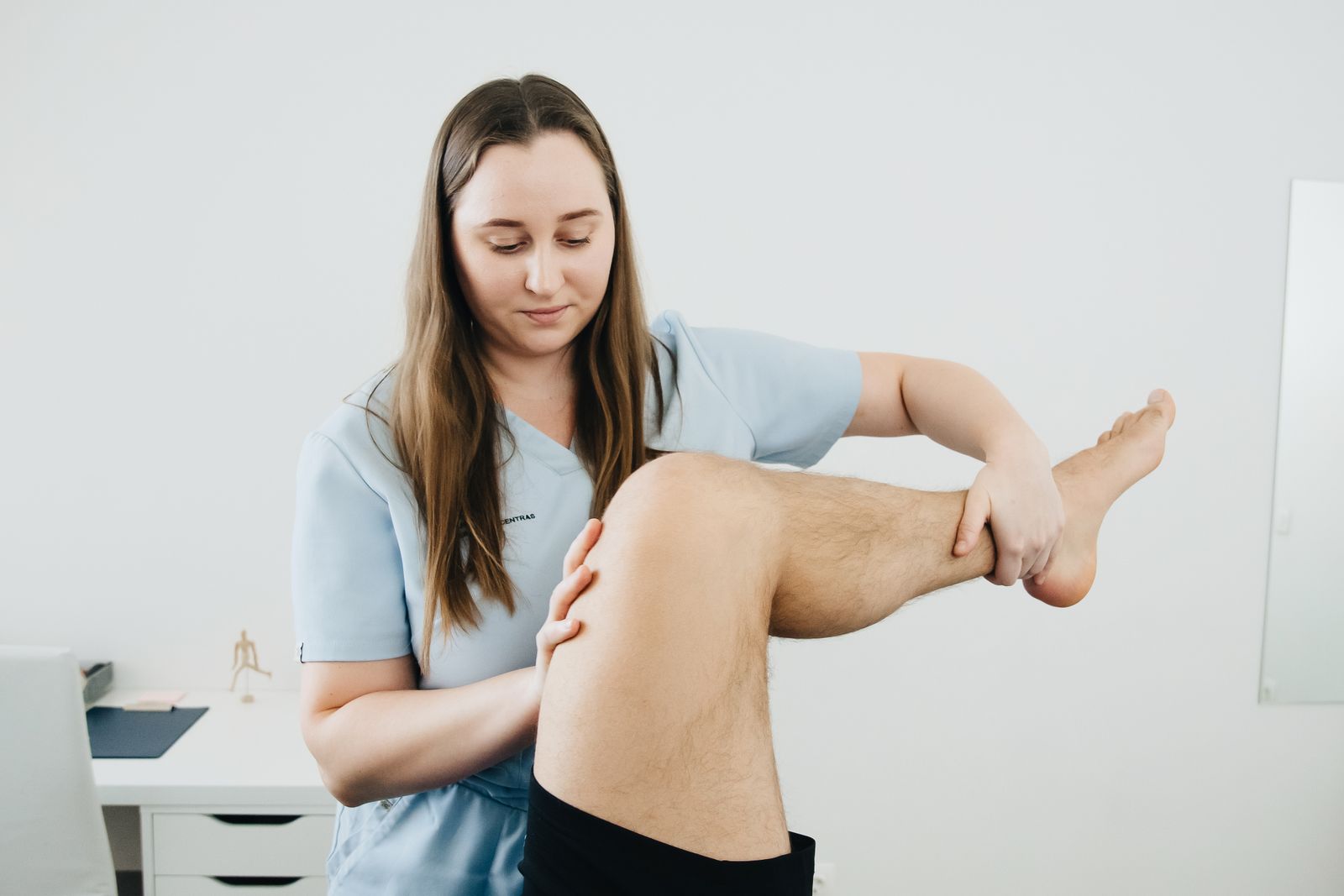
Warning Signs That Point to Injury, Not Soreness
- Visible swelling or bruising at a specific spot
- A popping or snapping sensation at the moment of injury
- Significant loss of strength or range of motion in the affected area
- Pain that gets worse with movement rather than easing into it
- Instability, like a joint feeling like it might give way
- Pain that hasn’t improved at all after 5-7 days
There’s also a rare but serious condition worth knowing about: rhabdomyolysis, an extreme breakdown of muscle tissue, most often triggered by an unusually intense first-time or after-a-long-break workout. Warning signs include severe, disproportionate muscle pain, significant swelling, and notably dark (tea- or cola-colored) urine. This combination warrants prompt medical attention rather than waiting it out.
What to Do in Each Case
For ordinary DOMS, light movement, adequate protein, sleep, and time are the main tools — it resolves on its own. For suspected injury, the standard early approach is rest, ice, compression, and elevation (RICE), avoiding the movement that caused the pain, and seeing a doctor or physical therapist if pain is severe, doesn’t improve within a few days, or comes with any of the warning signs above.
Frequently Asked Questions
Can I keep training through DOMS? Generally yes, light to moderate activity is usually fine and can even help, though very sore muscles may benefit from a lighter session or a different muscle group that day.
Should I ever push through sharp pain? No — sharp, localized, or worsening pain is a signal to stop and assess, not something to push through, since continuing to train an actual strain or sprain can turn a minor injury into a much longer one.
When should I see a doctor? If pain is severe, doesn’t improve after about a week, is accompanied by significant swelling or bruising, or involves dark urine, joint instability, or a popping sensation at the time of injury.
The Key Distinguishing Features
Normal muscle soreness, whether from a new exercise or an intense session, and an actual injury can produce overlapping initial sensations, which is exactly why people sometimes train through something that needed rest, or unnecessarily avoid exercise over soreness that was completely normal. A few reliable distinguishing patterns help separate the two: typical soreness (DOMS) is diffuse, spread across a muscle belly rather than pinpointed at a single spot, develops gradually over 24-48 hours after exercise rather than appearing immediately, feels dull and achy rather than sharp, and tends to improve with gentle movement rather than worsening. Injury pain more often has a specific, identifiable onset (a particular movement or moment during exercise), is localized to a precise point rather than spread across a muscle, can feel sharp, stabbing, or like something “gave way,” and often worsens rather than improves with continued movement.
Joint-related pain deserves particular attention as a red flag: normal muscle soreness occurs within the muscle belly, not at the joint itself, so pain concentrated specifically at a joint, especially with swelling, instability, or reduced range of motion, points more toward a ligament, tendon, or joint issue than ordinary post-exercise soreness.
Other Warning Signs Worth Knowing
Beyond the sharp-versus-dull and localized-versus-diffuse distinctions, several other signs suggest something beyond typical DOMS: visible swelling or bruising, which normal soreness doesn’t typically produce, significant loss of strength or range of motion that doesn’t track with how sore you’d expect to feel, pain that persists or worsens beyond the typical 3-5 day DOMS window, numbness or tingling, which can indicate nerve involvement, and pain severe enough to noticeably alter how you walk or move, sometimes called a compensatory or guarded movement pattern. Any of these, individually or in combination, are reasonable prompts to stop training that specific movement and have the issue evaluated rather than pushing through under the assumption it’s ordinary soreness.
When to See a Doctor or Physical Therapist
Pain that doesn’t fit the typical DOMS pattern described above, that’s accompanied by significant swelling or loss of function, or that doesn’t meaningfully improve within a week warrants evaluation by a doctor or physical therapist rather than continued self-management. Getting an accurate assessment matters practically, not just for treatment, but because continuing to train through an actual injury, mistaking it for normal soreness, is one of the more common ways a minor, easily treatable issue becomes a more serious, longer-term problem requiring significantly more recovery time than early intervention would have needed.
Sources
- Cedars-Sinai — What Is Delayed Onset Muscle Soreness?
- American College of Sports Medicine
- MedlinePlus (U.S. National Library of Medicine)
Final Thoughts
The dividing line between ordinary soreness and a real injury usually comes down to three things: timing (delayed vs. immediate), quality (dull vs. sharp), and trajectory (improving vs. worsening). When in doubt, especially with any of the specific warning signs above, it’s worth erring toward caution and a professional opinion rather than assuming it’s “just soreness.”
About the Author
This article was written and reviewed by Maya Chen, focused on translating public health information into clear, practical guidance for everyday readers. If you spot an error or have a correction, please contact us.