
“Blue light from your phone is ruining your sleep” has become one of those health facts everyone repeats, alongside a booming market for amber-tinted glasses promising to fix it. The actual research is more layered: the biology behind the claim is real, but the specific fix people reach for (blue-light blocking glasses) has surprisingly inconsistent evidence behind it.
The Biology That’s Actually Well-Established
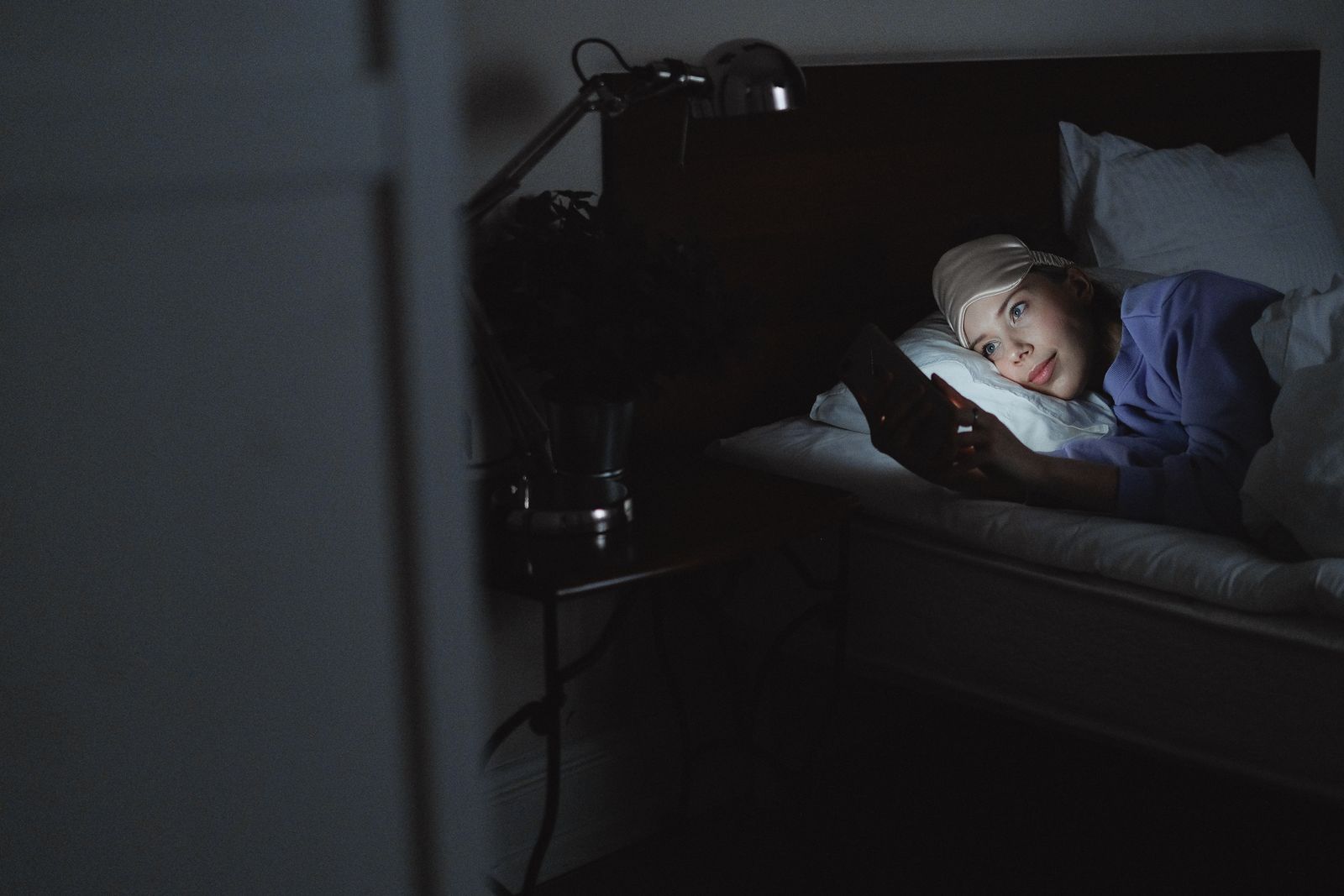
Evening exposure to blue light, specifically wavelengths in the 459-484 nanometer range, does suppress melatonin production, delay your circadian phase, and prolong the time it takes to fall asleep. This part of the picture is well-supported: light exposure at the wrong time genuinely interferes with your body’s sleep-wake signaling, and blue-enriched light (the kind common in phone and laptop screens) has a particularly strong effect on this pathway compared to warmer light.
Where It Gets More Complicated: Do Blue-Light Glasses Actually Work?
This is the part that surprises people. A systematic review and meta-analysis of randomized controlled crossover trials found that blue-light blocking glasses show small and inconsistent effects on sleep outcomes overall — roughly half of the trials reviewed showed a benefit, and the rest didn’t. Some individual studies do show real benefit: one trial found adults with insomnia who wore amber glasses for three hours before bed for two weeks reported a 67% improvement in subjective sleep quality versus a control group, and a separate week-long trial found evening amber glasses added about 30 minutes of total sleep time. The honest summary: they help some people meaningfully and don’t move the needle much for others, and there’s no reliable way to predict which group you’re in without trying it yourself.

What the Evidence Actually Supports More Strongly
Rather than relying on glasses alone, the research points toward broader “light hygiene”: reducing overall light exposure, not just the blue wavelength specifically, in the hour or so before bed. This means dimming household lights generally, not just filtering your phone screen, since bright light of any color close to bedtime delays circadian signaling to some degree. Reducing nighttime screen use altogether, rather than trying to neutralize its effect with a filter, has more consistent support than glasses alone.
Practical Takeaways
- Dim household lighting generally in the hour before bed, not just screens
- If you must use screens at night, lowering overall brightness matters as much as the color temperature
- Blue-light glasses are low-risk and may help some people, but shouldn’t be treated as a guaranteed fix
- A consistent bedtime and reduced overall evening light exposure has more robust backing than any single gadget
Dimming light is one part of the picture; a fully dark, cool, quiet bedroom addresses several sleep factors at once, see our guide to the ideal sleep environment for the rest of it.
Frequently Asked Questions
Do phone “night mode” settings actually help? They reduce blue light emission somewhat, but since overall brightness and total light hygiene matter too, night mode alone is a partial fix rather than a complete one.
Is blue light during the day harmful too? No — daytime blue light exposure, including from sunlight, is actually beneficial for maintaining a healthy circadian rhythm. The concern is specifically about evening and nighttime exposure.
Should I buy blue-light blocking glasses? They’re inexpensive and low-risk to try, and some people do report meaningful benefit, but don’t expect them to fully offset late-night scrolling or replace reducing screen use before bed.
What Blue Light Actually Does to Sleep Hormones
The core science here is genuinely solid: light, particularly the blue wavelengths common in daylight and heavily represented in most digital screens and LED lighting, suppresses melatonin production more effectively than warmer, dimmer light, and melatonin is the hormone your brain releases in the evening to signal that it’s time to prepare for sleep. Research measuring melatonin levels after screen exposure versus no exposure in the evening consistently finds screens delay and reduce melatonin release, which can push back the timing of your body’s natural sleep signal and make falling asleep at your intended bedtime more difficult. This mechanism is well-established and not seriously disputed in sleep research.
Where the popular narrative around blue light gets ahead of the evidence is in some of the more dramatic marketing claims, particularly around blue-light-blocking glasses as a standalone fix, which has considerably weaker and more mixed direct research support for meaningfully improving sleep outcomes than the melatonin-suppression mechanism alone would suggest.
Separating the Marketing From the Research
Studies specifically testing blue-light-blocking glasses for improving real-world sleep quality have produced mixed and generally more modest results than marketing for these products implies, some show modest benefit, others show no significant difference compared to no intervention, and reviews of the evidence generally describe the research as preliminary or inconsistent rather than strongly conclusive. Part of the complication is that screen use before bed affects sleep through more than just blue light, the content itself, stressful emails, engaging videos, stimulating conversation, independently activates your nervous system in ways that blocking blue light alone doesn’t address, meaning glasses that filter light but not screen content may only address part of the overall problem.
This doesn’t mean blue light exposure is irrelevant, the underlying melatonin-suppression mechanism is real, it means the most effective evening strategy likely needs to address both light and content, not just light alone, to see the full potential sleep benefit.
What’s Actually Worth Doing
Reducing overall screen exposure in the hour or two before bed, or at minimum switching to night mode or a warm color filter (a free, built-in feature on most modern devices) alongside dimming overall room lighting in the evening, addresses the light component with solid mechanistic support and no downside. Being selective about screen content in the evening, avoiding stressful or highly stimulating material, addresses the second, often underappreciated factor. Blue-light glasses aren’t harmful to try, but they shouldn’t be relied on as a complete substitute for reducing overall evening screen exposure and stimulating content if sleep quality is a genuine concern.
Sources
- “Efficacy of blue-light blocking glasses on actigraphic sleep outcomes,” Frontiers in Neurology
- NHLBI (National Heart, Lung, and Blood Institute)
- NIH (National Institutes of Health)
Final Thoughts
Blue light really does affect melatonin and sleep onset, that part isn’t myth. But the popular fix, blue-light glasses, has more inconsistent evidence than the marketing suggests. Reducing overall evening light and screen time, not just filtering one wavelength, is the more reliably supported habit.
About the Author
This article was written and reviewed by Sarah Whitfield, focused on translating public health information into clear, practical guidance for everyday readers. If you spot an error or have a correction, please contact us.