
The soreness that shows up a day or two after a tough workout — not immediately after, but the following morning or even the day after that — has a name: delayed onset muscle soreness, or DOMS. It’s extremely common, and also widely misunderstood, starting with what actually causes it.
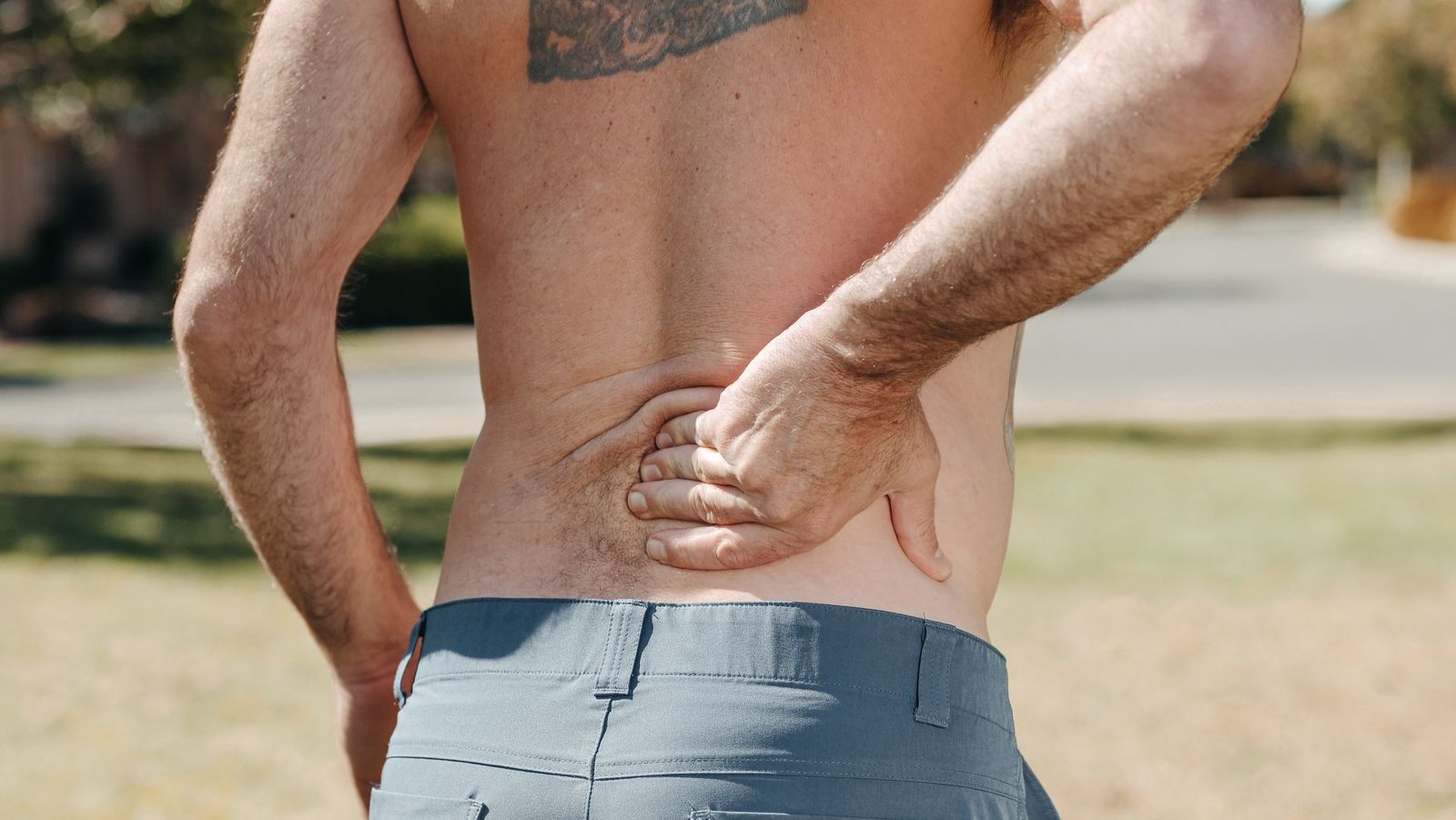
It’s Not Lactic Acid
One of the most persistent exercise myths is that DOMS is caused by lactic acid buildup in muscles. In reality, lactic acid (technically lactate) clears from the bloodstream within about an hour after exercise ends, long before soreness typically peaks. DOMS is now understood to result from microscopic damage to muscle fibers and connective tissue, particularly from eccentric muscle contractions (the lengthening phase of a movement, like lowering into a squat), followed by an inflammatory repair response that produces the soreness sensation, typically peaking 24-72 hours after the triggering exercise.
The Repeated Bout Effect
One of the more useful things to know about DOMS is the “repeated bout effect”: after doing a specific exercise or movement pattern, your muscles adapt and become more resistant to damage from that same movement in subsequent sessions, resulting in progressively less soreness even at similar or higher training loads. This is part of why the first workout back after a long break, or the first time trying a new exercise, tends to produce the most dramatic soreness — and why it fades with consistent, repeated exposure.

What Actually Helps (and What Doesn’t Much)
- Light movement: gentle activity and blood flow to the area may modestly ease perceived soreness, though it doesn’t dramatically speed the underlying repair process
- Foam rolling and massage: some research supports modest reductions in perceived soreness and improved short-term mobility, though effects are generally small
- NSAIDs (ibuprofen, etc.): can reduce pain perception, but some research suggests regular use may blunt certain training adaptations if used routinely after every workout, so occasional use is more reasonable than a standard post-workout habit
- Cold water immersion: research findings are mixed, with some studies showing modest soreness reduction and others showing little benefit, and possible interference with strength adaptations if used too frequently after resistance training
- Complete rest: not typically necessary or even ideal — DOMS in one muscle group doesn’t prevent training a different muscle group, and staying moderately active generally feels better than complete inactivity
Frequently Asked Questions
Is more soreness a sign of a better workout? Not necessarily — soreness reflects unaccustomed stress or a new stimulus more than it reflects the effectiveness or quality of a workout, and well-trained individuals doing familiar movements often have minimal soreness despite excellent training adaptations.
When should soreness be a concern rather than normal DOMS? Severe, disproportionate swelling, dark urine, or pain that doesn’t improve after several days can indicate a rarer, more serious condition (rhabdomyolysis) and warrants medical attention rather than being dismissed as ordinary soreness.
Why Lactic Acid Was Never the Real Explanation
For decades, popular fitness advice attributed delayed-onset muscle soreness to lactic acid buildup lingering in muscles after exercise, a theory that’s now understood to be incorrect based on the actual timeline involved. Lactic acid (more precisely, lactate) is cleared from muscle tissue within roughly an hour after exercise ends, while DOMS characteristically peaks 24-72 hours later, a timing mismatch that alone rules out lactate as the cause. The current scientific understanding instead points to microscopic damage to muscle fibers and connective tissue, particularly from eccentric muscle contractions (the lengthening phase of a movement, like lowering a weight or running downhill), which triggers an inflammatory repair response, and it’s this repair process, not lingering metabolic byproducts, that produces the soreness, swelling, and stiffness associated with DOMS.
This is why new or unfamiliar exercises, particularly ones emphasizing eccentric loading, tend to produce more pronounced DOMS than familiar routines, and why the same workout tends to produce progressively less soreness over repeated sessions as the muscle adapts, a phenomenon called the repeated bout effect.
What Actually Helps, and What Doesn’t
Research on DOMS treatments has tested many popular remedies with mixed results. Light active movement and gentle stretching provide modest, temporary symptom relief for many people without accelerating actual tissue repair. Massage has shown modest benefit for perceived soreness in several studies, though the effect on objective muscle function recovery is less clear. Cold water immersion has mixed evidence, some studies show modest soreness reduction, though there’s growing research suggesting it may blunt some of the muscle adaptation signals you’re actually training for if used too routinely after strength training specifically. NSAIDs like ibuprofen can reduce the perceived pain of DOMS but similarly may interfere with some of the muscle repair and adaptation process when used regularly, making them a reasonable occasional tool rather than a routine post-workout habit.
Adequate protein intake and sleep, the same fundamentals that support any exercise recovery, remain among the more consistently supported approaches for genuinely speeding the underlying repair process, as opposed to strategies that mainly mask the discomfort without addressing the tissue repair itself.
When Soreness Might Be Something Else
Typical DOMS, while uncomfortable, is diffuse, symmetric (affecting muscles similarly on both sides if the exercise was bilateral), improves with gentle movement, and resolves within about a week without intervention. Pain that’s sharp rather than dull and achy, concentrated at a specific joint rather than throughout the muscle belly, accompanied by significant swelling or bruising, or that worsens rather than improves over several days points toward a possible actual injury rather than normal DOMS, and is worth having evaluated rather than pushed through, since continuing to train through a genuine injury, mistaking it for ordinary soreness, is a common way minor issues become more serious ones.
Sources
- American College of Sports Medicine — Delayed Onset Muscle Soreness Research
- National Library of Medicine — DOMS: Treatment Strategies and Performance Factors
- American College of Sports Medicine
Final Thoughts
DOMS is a normal part of adapting to new or unaccustomed exercise stress, not a sign of lactic acid buildup or a required indicator of workout effectiveness. Staying moderately active, being patient, and letting the repeated bout effect do its work is more useful than chasing aggressive soreness-fighting interventions.
This article is for general educational purposes and is not a substitute for personalized medical or fitness advice.
About the Author
This article was written and reviewed by Ethan Brooks, focused on translating public health information into clear, practical guidance for everyday readers. If you spot an error or have a correction, please contact us.