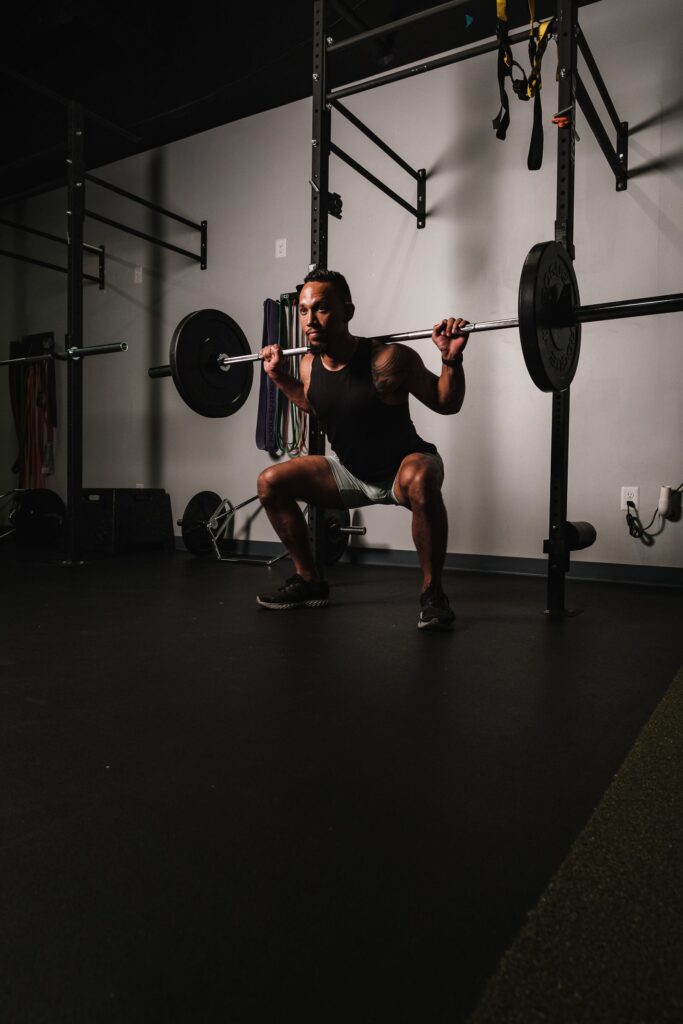
Walk into any gym and you’ll see both: someone squatting under a loaded barbell, working several joints and muscle groups at once, and someone else doing slow, controlled bicep curls, isolating a single muscle. Both compound and isolation exercises have a place in a well-rounded training program — they just serve different purposes.

What Sets Them Apart
Compound exercises move more than one joint at a time and recruit multiple muscle groups together — squats (hips, knees, ankles), deadlifts (hips, knees, spine stabilizers), bench press (shoulders, elbows), and pull-ups (shoulders, elbows) are classic examples. Isolation exercises move a single joint and target one primary muscle relatively directly — bicep curls, leg extensions, lateral raises, and calf raises fall into this category.
What Compound Exercises Do Well
- Allow lifting heavier total loads, which drives strength adaptations effectively
- Train movement patterns that closely mirror everyday and athletic activity (squatting, hinging, pushing, pulling)
- Are relatively time-efficient, training multiple muscle groups within a single exercise
- Tend to produce a larger overall hormonal and metabolic training response per set
What Isolation Exercises Do Well
- Allow directly targeting a specific muscle that may be lagging in size or strength relative to others
- Are useful for rehabilitation, where an injured or weak area needs focused, controlled loading without other joints compensating
- Reduce technical complexity and coordination demands, letting a specific muscle be pushed close to fatigue with less overall systemic fatigue
- Can help address strength imbalances between limbs, since single-limb isolation work makes it harder for a stronger side to compensate
Using Both Together
Most well-designed strength training programs use compound movements as the foundation of a session, typically performed earlier when energy and coordination are freshest, followed by isolation exercises to address specific muscles or lagging areas. Neither approach needs to fully replace the other for most training goals, whether the priority is general strength, muscle growth, or athletic performance.
Frequently Asked Questions
Are compound exercises better for building muscle than isolation exercises? Both can build muscle effectively; compound exercises are generally more time-efficient for overall size and strength, while isolation exercises are useful for targeting specific muscles that may need extra direct work.
Should beginners start with compound or isolation exercises? Most strength and conditioning guidance suggests beginners build a foundation with compound movements first, since they train fundamental movement patterns and offer the most efficient path to overall strength.
What Each Category Is Actually Good For
Compound exercises, like squats, deadlifts, bench presses, and pull-ups, move more than one joint at once and recruit multiple muscle groups simultaneously, which makes them efficient for building overall strength and functional movement patterns that translate to daily activity and sports. Isolation exercises, like bicep curls, leg extensions, and lateral raises, move a single joint and target one muscle group specifically, trading efficiency for precision. Neither category is objectively superior; they solve different problems, and most well-designed training programs use both rather than picking one exclusively.
The efficiency argument for compound lifts is real: a single set of squats works your quads, glutes, hamstrings, and core stabilizers together, which is why compound movements are typically prioritized when training time is limited. But that same multi-joint demand is also why compound lifts are harder to learn with good form and place more coordination and central nervous system demand on a given workout, which is part of why isolation work still has a place.
Where Isolation Work Earns Its Place
Isolation exercises are particularly useful for addressing a specific weak point that a compound lift doesn’t sufficiently challenge, correcting a muscular imbalance between limbs, or continuing to train a muscle group when an injury limits your ability to safely perform a compound movement. Bodybuilders and physique-focused lifters also use isolation work deliberately to target the growth of a specific muscle beyond what compound lifts alone would produce, since compound movements tend to be limited by whichever muscle in the chain fatigues first, not necessarily the one you’re most trying to develop.
Isolation exercises are also generally lower-risk from a technical standpoint, since there’s a single joint and movement pattern to master, which makes them useful for beginners building a mind-muscle connection or for anyone returning from injury under guidance from a physical therapist or trainer.
Building a Program With Both
A common and well-supported structure is to prioritize compound lifts early in a workout, when you have the most energy and coordination available for technically demanding, high-fatigue movements, then follow with isolation work targeting specific muscles that need extra volume. For general strength and functional fitness, compound lifts can make up the large majority of a program with isolation work as a smaller supplement. For physique or bodybuilding-specific goals, the ratio often shifts to include more isolation volume. Neither approach is wrong; the right mix depends on what you’re actually training for.
A common beginner mistake is skipping compound lifts entirely in favor of isolation work because it feels more approachable, which tends to slow overall strength progress and is one of the more common reasons early gym results plateau faster than expected.
Time constraints are a legitimate reason to lean more heavily on compound lifts, since they deliver more total muscle stimulus per minute spent training, making them a sensible default when a workout needs to be condensed into a shorter session.
For rehabilitation specifically, isolation exercises often take priority initially, since they allow targeted strengthening of a specific weakened muscle without demanding the broader coordination a compound lift requires, before gradually reintroducing compound movements as strength and control return.
Sources
- National Strength and Conditioning Association — Resistance Training Resources
- American College of Sports Medicine — Resistance Training Guidelines
- American College of Sports Medicine
Final Thoughts
Compound and isolation exercises aren’t competing approaches — they’re complementary tools. Building a program around compound lifts, then filling gaps with targeted isolation work, covers both efficient overall strength development and focused attention on individual muscles.
This article is for general educational purposes and is not a substitute for personalized medical or fitness advice.
About the Author
This article was written and reviewed by Maya Chen, focused on translating public health information into clear, practical guidance for everyday readers. If you spot an error or have a correction, please contact us.