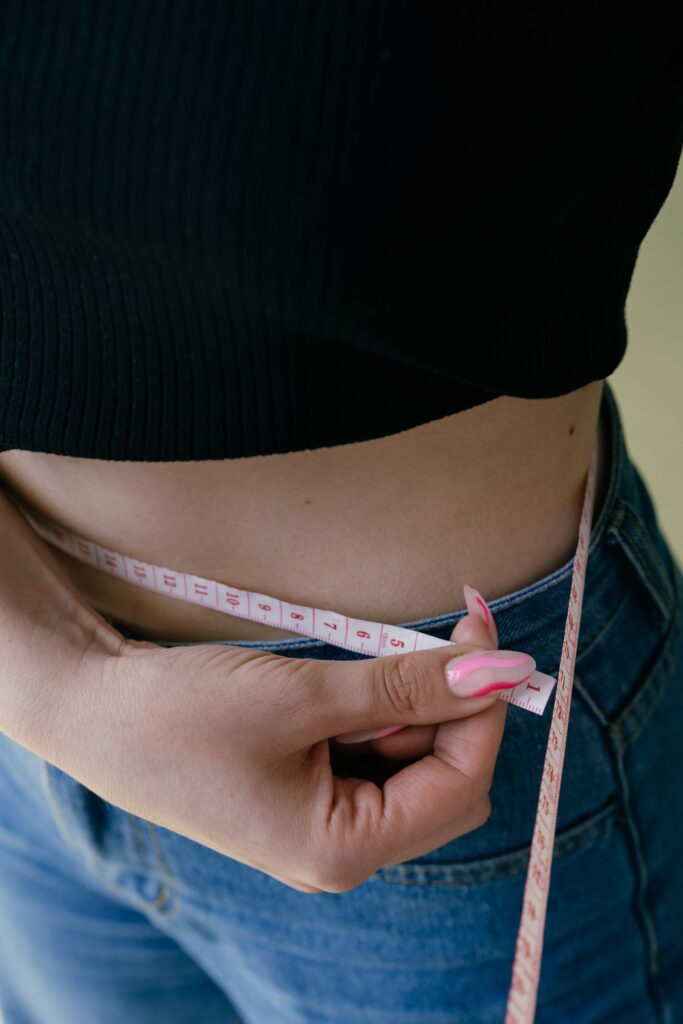
Body Mass Index (BMI) shows up on nearly every doctor’s office intake form, but it’s also one of the most misunderstood health metrics out there. It’s a useful population-level screening tool, but it has real, well-documented limitations at the individual level that are worth understanding before you put too much weight on a single number.

Calculate Your BMI
BMI Calculator
BMI is a screening tool, not a diagnosis. It does not account for muscle mass, bone density, body composition, age, sex, or ethnicity, and it should not be used alone to assess an individual’s health.
What BMI Categories Mean
- Below 18.5: underweight
- 18.5 to 24.9: normal weight range
- 25 to 29.9: overweight range
- 30 and above: obesity range, sometimes further divided into class 1, 2, and 3

Why BMI Has Real Limitations
BMI was originally developed as a population-level statistical tool, not an individual diagnostic measure, and it has several well-documented blind spots. It doesn’t distinguish between muscle and fat mass, which is why very muscular athletes can register as “overweight” or “obese” despite low body fat. It also doesn’t account for where fat is distributed on the body, even though visceral (abdominal) fat carries more metabolic risk than fat stored elsewhere at the same total body weight. BMI reference ranges were also developed primarily from studies of certain populations, and research has found the relationship between BMI and health risk can vary somewhat across different ethnic groups.
What’s Often Used Alongside BMI
- Waist circumference, which gives some indication of abdominal fat specifically
- Waist-to-hip ratio
- Body composition measurements (like DEXA scans or bioelectrical impedance), where available
- Overall clinical context: blood pressure, blood sugar, cholesterol, and personal/family health history
Frequently Asked Questions
Is BMI still useful despite its limitations? Yes, at a population level it correlates reasonably well with health risk on average, and it’s a fast, free, and simple starting point — the key caveat is not treating it as the final word for any one individual.
Are there different BMI ranges for children? Yes — for children and teens, BMI is interpreted using age- and sex-specific percentiles rather than the fixed adult categories used here.
What BMI Was Actually Designed to Do
BMI was developed in the 1830s by a Belgian mathematician, Adolphe Quetelet, not as a personal health assessment tool but as a way to describe body weight patterns across large populations for statistical purposes. It’s simply weight divided by height squared, a formula that says nothing directly about body composition, where fat is distributed, or how much of a person’s weight is muscle versus fat. It became widely used in medicine decades later largely because it’s cheap, fast, and requires no special equipment, not because it was validated as the most accurate individual health measure available. Understanding this origin helps explain why BMI performs well as a population-level screening tool, flagging trends across large groups, while performing considerably worse as a precise assessment of any single individual’s health.
Public health organizations that rely on BMI generally acknowledge this limitation directly and recommend it be used as an initial screening measure, not a standalone diagnostic tool, with follow-up assessment using other measures when there’s a reason for concern.
Where BMI Gets It Wrong
The most well-known limitation involves muscle mass: because BMI can’t distinguish muscle from fat, muscular athletes frequently score in the “overweight” or even “obese” category despite having low body fat percentages and excellent metabolic health, while someone with normal BMI but low muscle mass and high body fat, sometimes called “skinny fat” or normal-weight obesity, can have worse metabolic health than their BMI number suggests. BMI also doesn’t account for fat distribution, and as covered in research on waist-to-hip and waist-to-height ratios, where fat is stored matters as much as how much total fat is present for predicting cardiometabolic risk. Age, sex, and ethnicity also affect how well a given BMI number predicts health risk, with some research suggesting different BMI thresholds may be more appropriate for different population groups than the single universal cutoffs currently in common use.
None of this means BMI is useless, at a population level and as a rough initial screen, it correlates reasonably well with health risk on average. The problem is specifically applying it with high confidence to any one individual without considering these well-documented limitations.
What to Use Alongside It
For a more complete picture, health professionals increasingly recommend pairing BMI with additional measures: waist circumference or waist-to-height ratio to assess fat distribution, and where available, body composition measurement (like DEXA scans or bioelectrical impedance) to distinguish fat from muscle directly. Bloodwork, including blood pressure, blood sugar, and cholesterol, ultimately reflects metabolic health more directly than any body measurement. If your BMI falls outside the “normal” range but you have no other risk factors, or falls within “normal” but you have concerning bloodwork or a high waist circumference, that discrepancy is worth discussing with a doctor rather than treating BMI alone as the final word.
Sources
- CDC — About Body Mass Index (BMI)
- National Library of Medicine — Limitations of BMI Research
- CDC (Centers for Disease Control and Prevention)
- World Health Organization (WHO)
Final Thoughts
BMI is a reasonable first-pass screening number, not a complete health assessment. Pairing it with other measures, like waist circumference and overall clinical context, gives a much fuller picture than the number alone.
This article is for general educational purposes and is not a substitute for personalized medical advice.
About the Author
This article was written and reviewed by Drxty Editorial Team, focused on translating public health information into clear, practical guidance for everyday readers. If you spot an error or have a correction, please contact us.