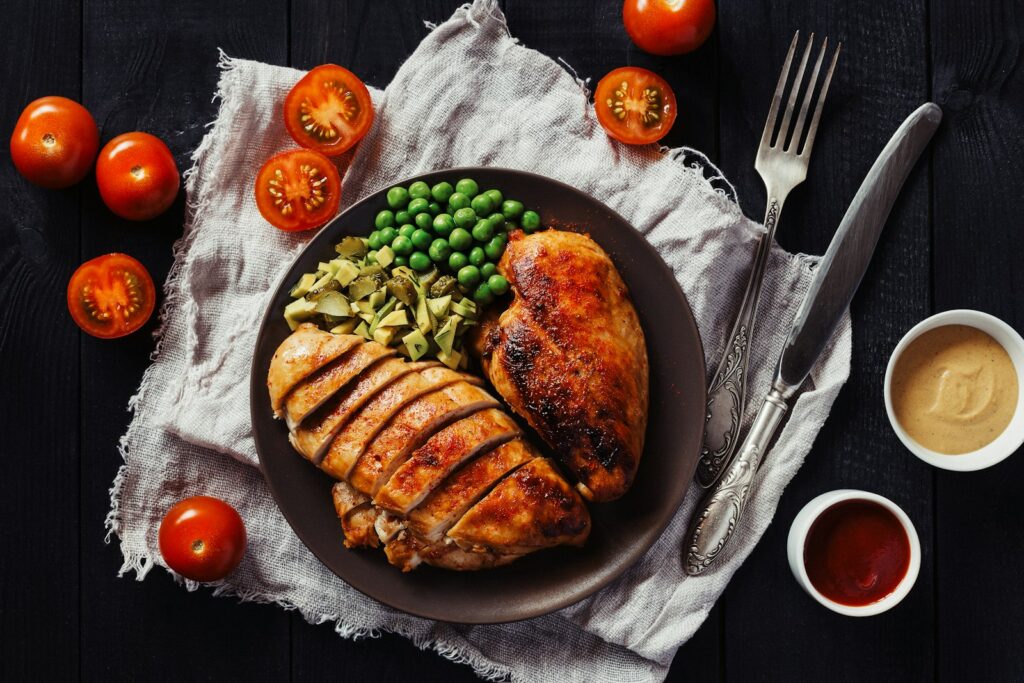
Once you know roughly how much protein you need per day, the next practical question is where it actually comes from. Our protein intake calculator can help you land on a daily target; this guide is the companion piece, a practical, USDA-sourced list of where to get it, across both animal and plant foods.
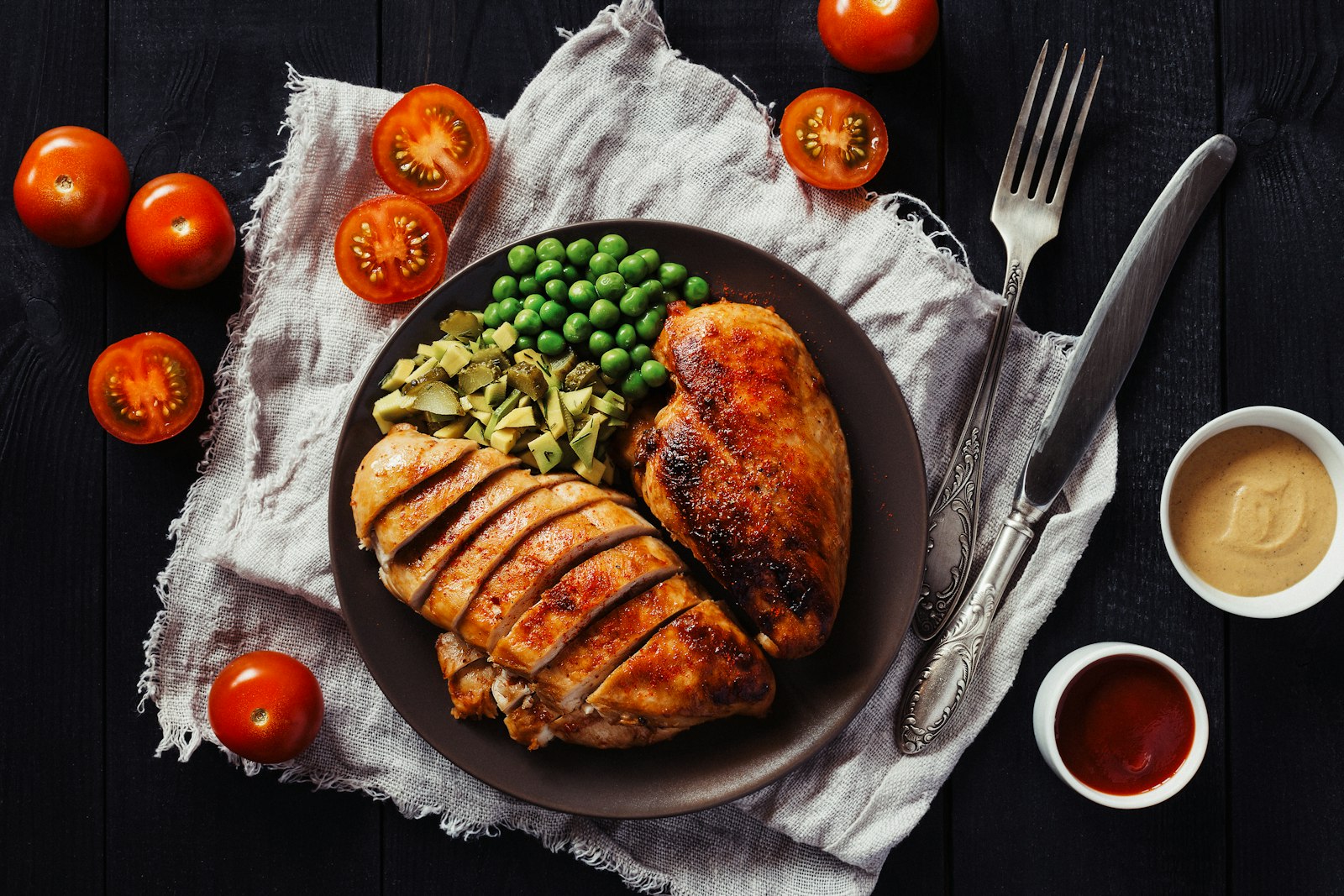
High-Protein Foods, by the Numbers
According to USDA FoodData Central, here is roughly how much protein common foods provide per typical serving:
| Food | Serving | Protein |
|---|---|---|
| Chicken breast, cooked | 3 oz | 26 g |
| Greek yogurt, plain nonfat | 1 cup | 25 g |
| Cottage cheese, low-fat | 1 cup | 25 g |
| Salmon, cooked | 3 oz | 22 g |
| Lentils, cooked | 1 cup | 16 g |
| Black beans, cooked | 1 cup | 16 g |
| Egg | 1 large | 6 g |
| Tofu | 3 oz | 6–8 g (varies by firmness) |
| Almonds | 1 oz (about 23 nuts) | 6 g |
Actual values vary somewhat by brand, cut, and preparation method, so treat these as practical estimates rather than exact figures for every product.
Animal vs. Plant Protein: What Actually Differs
Animal proteins (meat, fish, eggs, dairy) are “complete” proteins, meaning they contain all nine essential amino acids in meaningful amounts. Many individual plant proteins are lower in one or more essential amino acids, but eating a variety of plant proteins across the day, not necessarily in the same meal, generally covers the same ground. Our macronutrients guide covers how protein fits alongside carbohydrates and fat more broadly.
Practical Ways to Hit a Protein Target
- Include a protein source at each meal rather than concentrating it all at dinner.
- Greek yogurt, cottage cheese, and eggs are relatively cheap, quick ways to add protein without much prep.
- Canned tuna, salmon, and beans are shelf-stable options that require little planning.
- If using protein powder, treat it as a convenient supplement to whole foods, not a replacement for most of your intake.
Does It Matter When You Eat Protein?
Total daily protein intake appears to matter more than precise timing for most people. Our protein timing guide looks specifically at the “anabolic window” idea and what the research actually supports.
A Note on Individual Needs
Protein needs vary by body size, activity level, age, and goals, and certain medical conditions, particularly kidney disease, require specific protein guidance from a doctor or registered dietitian. This article is general nutrition education, not individualized medical advice.
Frequently Asked Questions
What is the easiest way to add more protein without meat?
Greek yogurt, cottage cheese, eggs, beans, lentils, and tofu are all accessible, protein-dense options that don’t require meat.
Is too much protein harmful?
For most healthy adults, moderately high protein intake is not associated with harm, but people with kidney conditions should follow guidance from their doctor, since protein needs are different in that context.
Do I need protein powder to hit my target?
Not necessarily. Most people can meet their protein needs through whole foods; powder is a convenience option, not a requirement.
The Bottom Line
A mix of animal and plant protein sources, spread across meals, is the most practical way to hit a daily protein target. The exact foods matter less than consistency, and most people can build a solid protein routine from a short list of accessible staples.
Sources
- USDA FoodData Central
- U.S. Department of Agriculture and HHS — Dietary Guidelines for Americans
