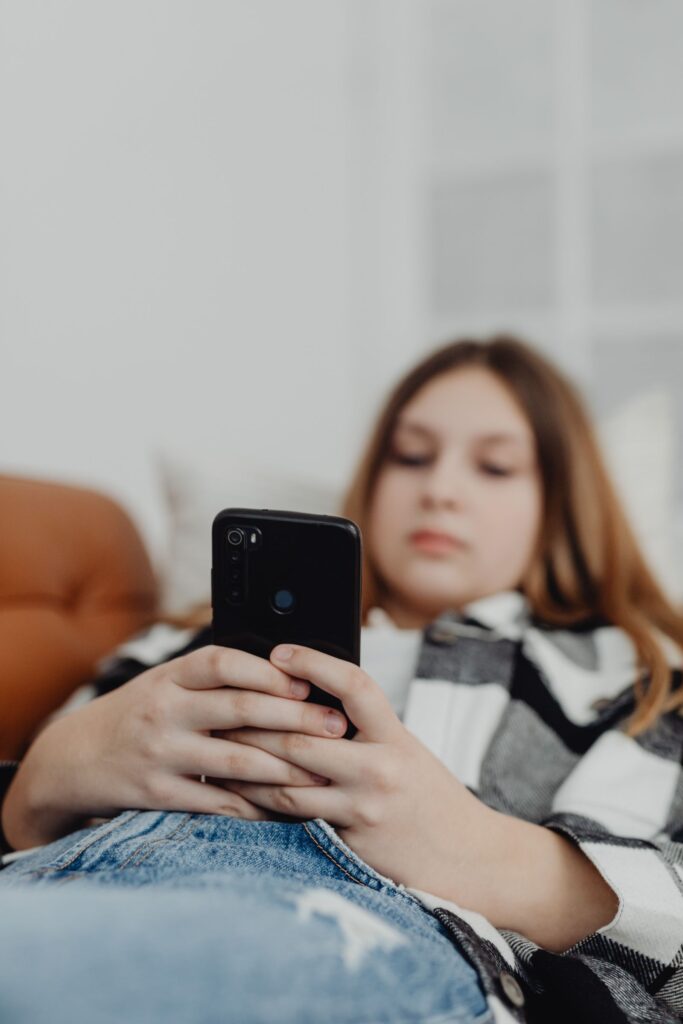
“Too much screen time” has become a catch-all worry, but recent research has gotten more specific about what’s actually happening: it’s not simply that screens are inherently harmful, it’s that they tend to displace sleep and physical activity, and those two displaced behaviors are doing much of the actual damage to mental health.
What Recent Research Actually Found
A 2026 study analyzing data from over 50,000 children and adolescents aged 6-17 found a clear association between screen time and mental health problems, including anxiety, depression, behavioral issues, and ADHD symptoms. Critically, the analysis found that short sleep duration and irregular bedtime substantially mediated this relationship — meaning a large part of why more screen time correlates with worse mental health is that it’s cutting into sleep and disrupting sleep timing, not necessarily a direct effect of screens themselves.
The numbers are notable: teens with 4 or more hours of daily screen time reported depression symptoms at roughly 26%, compared to about 9.5% among lighter users, with a similar pattern for anxiety symptoms (27% versus 15%).
This Isn’t Just Correlation
Correlational data always raises the “which came first” question, but a randomized controlled trial addressed this directly: participants who reduced their smartphone screen time for three weeks showed small-to-medium improvements in depressive symptoms, stress, sleep quality, and overall well-being compared to a control group. Because participants were randomly assigned rather than self-selecting, this points toward screen time reduction causing at least some of the improvement, not merely correlating with people who were already doing better.

What This Means Practically
- Protecting sleep, particularly by limiting screens in the hour or two before bed, may matter more than a blanket hourly screen-time limit
- Making sure screen time isn’t directly displacing physical activity (an outdoor walk instead of another hour of scrolling) addresses a second major mediating factor
- Total screen time still matters, but the “how” (is it cutting into sleep or movement) may be more actionable than the raw hour count alone
- For teens especially, irregular bedtimes tied to screen use appear to be a specific, addressable piece of the mental health association
Frequently Asked Questions
Is all screen time equally concerning? The research doesn’t suggest all screen use is identical — passive scrolling late at night that displaces sleep is a different concern than, say, a video call with family. Context and timing matter alongside raw quantity.
Does this research apply to adults too? Much of the large-scale data focuses on children and teens, but the underlying mechanism, screens displacing sleep and activity, plausibly applies across ages, even if the specific numbers differ.
What’s a reasonable first step to try? Based on the mediating factors identified in the research, protecting sleep (a screen cutoff before bed) and maintaining regular physical activity are more targeted starting points than an arbitrary total screen-time limit.
What the Research Actually Finds, Beyond the Headlines
Screen time research has produced a more nuanced picture than the simple “screens are bad for you” framing that dominates casual conversation. Large-scale studies looking at total screen time and health outcomes generally find small, statistically significant associations with things like reduced physical activity, sleep disruption, and in some studies, mental health measures, but the effect sizes for total screen time alone are often modest, considerably smaller than public concern might suggest, and vary a lot depending on what the screen time is actually used for. Passive scrolling through social media and screen use that displaces sleep or physical activity show more consistent negative associations than screen time used for active work, learning, or maintaining social connections.
This distinction, total hours versus what the time is displacing and what kind of use it is, has become a major focus of more recent research, since simply counting hours turns out to be a fairly blunt way to measure something that clearly has meaningfully different effects depending on content and context.
Where the Evidence Is Strongest
The most consistent, well-replicated finding across screen time research involves sleep: screen use in the hour or two before bed, through both light exposure affecting melatonin and the alerting, engaging nature of much digital content, reliably delays sleep onset and can reduce sleep quality, an effect found across many studies with reasonable consistency. Screen use displacing physical activity or in-person social interaction also shows a fairly consistent, if modest, negative association with wellbeing measures, largely because it’s substituting time that would otherwise go toward activities with established health benefits, an indirect effect rather than something inherent to screens themselves.
Research specifically on social media use, as opposed to general screen time, has found more consistent associations with mental health outcomes in some populations, particularly heavy, passive use (scrolling without interacting) in adolescents, though even this research area includes studies with mixed or smaller-than-expected effects, and researchers continue to debate how much of the association reflects social media causing distress versus already-distressed individuals using social media differently.
A More Useful Way to Think About Your Own Use
Given this research picture, tracking total screen time alone is a less useful personal metric than examining what your screen time is actually displacing and how you feel during and after specific types of use. Screen time that’s replacing sleep, exercise, or in-person connection is worth examining and likely reducing. Screen time used for work, learning, staying connected with distant family, or genuinely enjoyable, chosen activities carries a different risk profile than passive, unintentional scrolling, and treating all screen time as equally concerning tends to miss the more actionable, evidence-supported distinctions the research actually points to.
Sources
- “Excessive screen time is associated with mental health problems in US children and adolescents,” Humanities and Social Sciences Communications
- “Smartphone screen time reduction improves mental health: a randomized controlled trial,” National Library of Medicine
- NIH (National Institutes of Health)
- NIMH (National Institute of Mental Health)
Final Thoughts
Screen time’s effect on mental health looks less like a direct curse and more like a displacement problem: hours spent on a screen are often hours not spent sleeping or moving. Addressing those two specific downstream effects, rather than treating “screen time” as an undifferentiated villain, is a more actionable and better-supported place to start.
About the Author
This article was written and reviewed by Sarah Whitfield, focused on translating public health information into clear, practical guidance for everyday readers. If you spot an error or have a correction, please contact us.