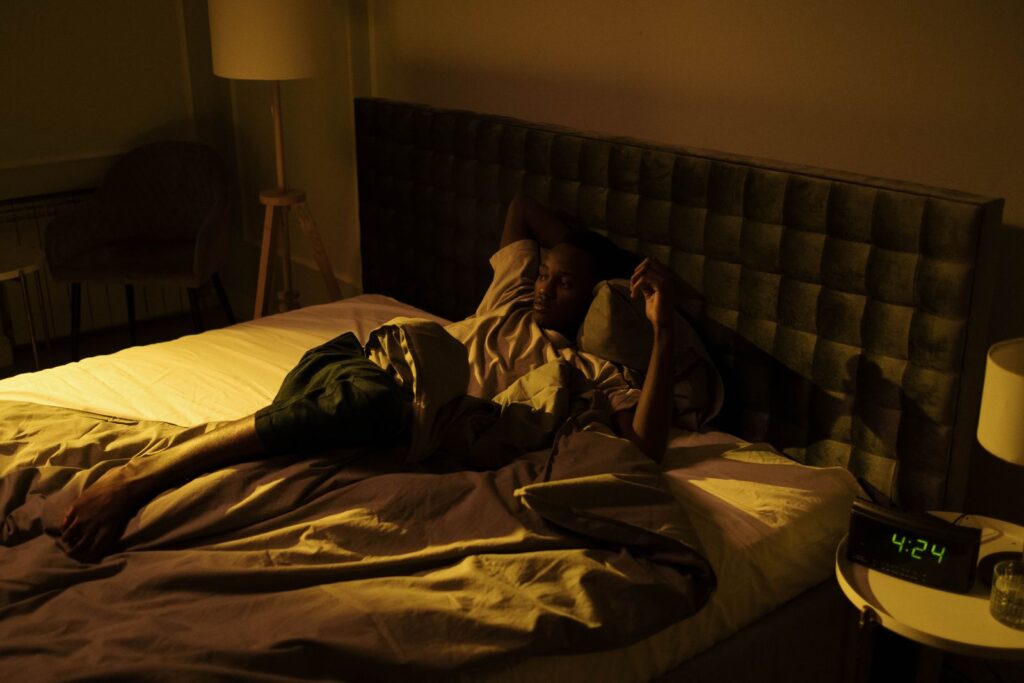
It is 11 p.m., you are lying in bed wide awake, and you cannot figure out why, since your last coffee was hours ago, right around 3 in the afternoon. Here is the uncomfortable truth: for a lot of people, that 3 p.m. coffee is still very much active in their bloodstream at 11 p.m. Caffeine does not simply wear off the way a lot of us assume it does, and understanding its actual timeline in your body can explain a surprising amount of unexplained tossing and turning.
This is not an argument for quitting caffeine. It is one of the most well-studied, widely used substances in the world, and for most healthy adults it is perfectly fine in moderation. But if sleep has been elusive and you have not connected the dots to your afternoon habits, the pharmacology below might be the missing piece.
What Caffeine Actually Does in Your Body
Throughout the day, a molecule called adenosine gradually builds up in your brain. The longer you are awake, the more adenosine accumulates, and the sleepier you feel — this is often called your “sleep pressure.” Caffeine works by blocking the receptors that adenosine would normally bind to. It does not give you energy so much as it prevents your brain from registering how tired it already is.
That blocking effect is temporary, but it lasts considerably longer than most people assume, which is really the whole story behind why an afternoon habit can quietly sabotage a nighttime one.

The Half-Life of Caffeine: Why That Afternoon Coffee Follows You to Bed
Caffeine has an average half-life of around five hours, meaning that five hours after you drink it, roughly half of it is still active in your system. Ten hours later, about a quarter remains. This is an average, though — individual half-lives can range anywhere from about two hours to as long as twelve, depending on genetics, liver function, medication use, and a handful of other factors covered below.
I did not really internalize this until I mapped out my own habits: a coffee at 3 p.m. still leaves meaningful caffeine in your bloodstream at 11 p.m., and a decent amount even at 1 a.m. It is not that the coffee itself is keeping you up in an obvious way — you probably will not feel “wired” — but it can still be blocking enough adenosine receptors to make falling asleep harder and lighten the sleep you do get.
How Caffeine Disrupts Sleep, Even When You Fall Asleep Just Fine
One review of caffeine and sleep research found that caffeine consumption, on average, reduced total sleep time by about 45 minutes and cut sleep efficiency (the percentage of time in bed actually spent asleep) by roughly 7 percent. It also increased the time it took to fall asleep by around 9 minutes and increased nighttime waking by about 12 minutes. None of these numbers sound dramatic in isolation, but stacked together, they add up to a night that feels distinctly less restorative, even if you technically got your usual number of hours.
This is part of why some people insist caffeine “doesn’t affect” their sleep. They fall asleep at their normal time and do not consciously notice anything wrong. What they may be missing is a subtler decline in sleep quality — less time in deeper, more restorative stages, and more fragmented waking throughout the night.
Find Your Personal Caffeine Cutoff
Using the average five-hour half-life, you can get a rough estimate of how much caffeine will still be active in your system by the time you go to bed. This will not be exact — your own metabolism could be faster or slower — but it is a genuinely useful starting point for deciding when to have your last cup.
Estimate how much caffeine will still be in your system at bedtime.
Based on caffeine’s average 5-hour half-life. Your personal metabolism can be meaningfully faster or slower — this is a general estimate, not a lab measurement.
Why Caffeine Affects People So Differently
The five-hour average hides a lot of individual variation. A liver enzyme called CYP1A2 does most of the work of metabolizing caffeine, and how active that enzyme is varies significantly from person to person based on genetics — some people are “fast metabolizers” who clear caffeine quickly, while others are considerably slower. Smoking tends to speed up caffeine metabolism, while pregnancy and hormonal contraceptive use can roughly double or even triple how long caffeine lingers in the body. Liver conditions can slow clearance as well.
This is a big part of why one person can have an espresso after dinner and sleep soundly, while another feels the effects of a morning coffee well into the evening. If you consistently notice sleep trouble on days you have had caffeine, it is worth taking that seriously as personal data, even if it does not match what works for people around you.
Practical Ways to Protect Your Sleep Without Giving Up Caffeine Entirely
- Set a personal cutoff time. Many people do well stopping caffeine at least 6 to 8 hours before bed; if you are caffeine-sensitive or a slow metabolizer, 10 hours may serve you better.
- Watch hidden sources. Some sodas, chocolate, and even certain pain relievers contain caffeine that can add up without you tracking your usual coffee or tea intake.
- Keep total daily intake reasonable. Up to about 400 mg per day — roughly four cups of brewed coffee — is considered generally safe for most healthy adults, per Mayo Clinic guidance.
- Notice your own pattern before assuming caffeine is fine for you. Try a few nights without afternoon or evening caffeine and see whether sleep onset or quality changes.
Frequently Asked Questions
Does decaf coffee still have caffeine? Yes, in small amounts — typically 2 to 15 mg per cup, compared to roughly 95 mg in regular brewed coffee. For most people this is negligible, but very caffeine-sensitive individuals may still notice it.
Will melatonin cancel out caffeine’s effects? Not reliably. Melatonin signals your body that it is nighttime, but it does not block or accelerate the clearance of caffeine, so an active dose of caffeine can still interfere with sleep quality even alongside melatonin.
Is it better to quit caffeine completely for better sleep? Not necessarily. For most healthy adults, moderate caffeine earlier in the day is not a sleep problem. The bigger lever for most people is timing rather than total elimination.
Final Thoughts
Caffeine is not the enemy, and you do not need to give it up to sleep well. But it is worth being honest with yourself about its actual timeline in your body, rather than assuming it is fully cleared out by bedtime just because a few hours have passed. If sleep has been inconsistent and you cannot pin down why, your afternoon coffee habit is a genuinely reasonable place to start looking.
Sources
- Sleep.com — Caffeine and Sleep
- AJMC — Caffeine and Sleep Review Suggests Consumption Guidelines
- Mayo Clinic — Caffeine: How Much Is Too Much?
This article is for general educational purposes and is not a substitute for personalized medical advice. If you have a health condition affected by caffeine, or take medications that interact with it, talk to your doctor.
About the Author
This article was written and reviewed by the Drxty Editorial Team, focused on translating public health information into clear, practical guidance for everyday readers. If you spot an error or have a correction, please contact us.