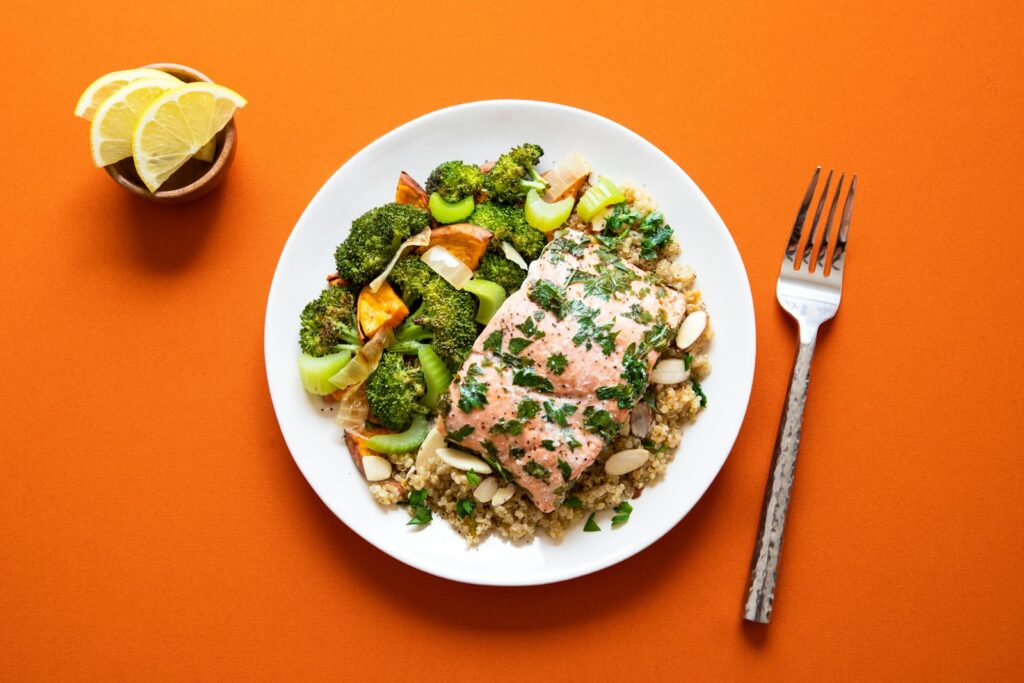
Portion control gets a bad reputation because it sounds like a synonym for restriction. In practice, it is closer to the opposite: a way to eat a wider variety of foods, including the ones you actually enjoy, without needing to weigh, measure, or count anything for most meals. The USDA’s MyPlate model is built entirely around this idea.
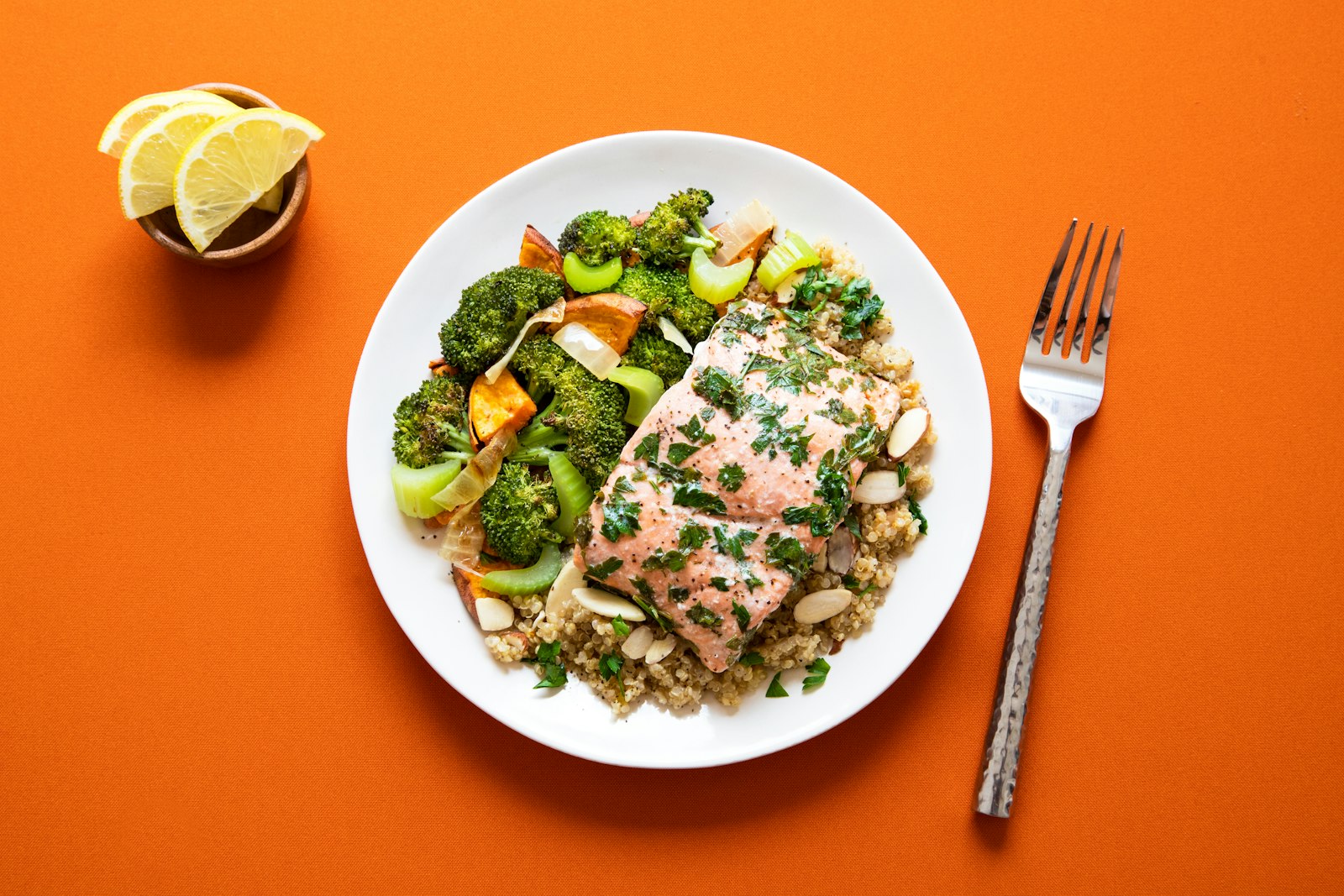
The USDA Plate Method, Explained
The USDA’s MyPlate framework divides a standard plate into sections without requiring any measuring tools:
| Section | Share of the Plate | Examples |
|---|---|---|
| Vegetables | ~40% | Leafy greens, broccoli, peppers, carrots |
| Grains | ~30% | Rice, pasta, bread, potatoes (at least half whole grain) |
| Protein | ~20% | Meat, fish, eggs, beans, tofu, nuts |
| Fruit | ~10% | Fresh, frozen, or canned fruit (or served alongside) |
A cup of low-fat dairy, or an equivalent, typically rounds out the meal on the side. This model works because it does not require nutrition math at every meal. It gives you a visual template you can eyeball on any plate, at home or at a restaurant.
Why Portion Size Matters, Separately From Food Choice
Even nutrient-dense, “healthy” foods contribute calories, and restaurant and packaged portion sizes in the United States have grown substantially over recent decades. This does not mean any single large portion is a problem, but consistently eating oversized portions, of any food, is one of the more common and least noticed contributors to gradual weight gain. Our guide to reading a nutrition label explains how “serving size” on packaging often does not match what people actually pour into a bowl.
Practical Portion Cues Without a Scale
- Protein: roughly the size and thickness of your palm.
- Grains and starchy carbs: roughly the size of your cupped hand.
- Fats like oils, nut butter, or cheese: roughly the size of your thumb.
- Vegetables: as much as fits in two open hands, with no real upper limit for most non-starchy vegetables.
These hand-based cues scale naturally with body size, which is part of why they tend to be more sustainable long-term than fixed gram targets for most people. For anyone who prefers exact numbers for a specific goal, our macro targets guide and protein intake calculator walk through the more precise approach.
Simple Habits That Support Portion Awareness
- Serve meals on a plate rather than eating directly from a large bag or container.
- Eat slowly enough to notice fullness cues, which typically take about 15 to 20 minutes to register.
- Pre-portion snacks into smaller containers instead of eating from the original package.
- When eating out, consider sharing a dish or boxing up half before starting, since restaurant portions are often sized for more than one meal.
What Portion Control Is Not
Portion control is not the same as restrictive dieting, and it is not about eliminating entire food groups or feeling guilty about a larger meal on occasion. For a broader framework on building sustainable weekly eating habits, our Meal Prep 101 guide covers how portioning fits into planning meals for an entire week.
Frequently Asked Questions
Do I need to measure food to control portions effectively?
Not necessarily. Visual tools like the plate method and hand-based portion cues work well for most people. Measuring can be useful short-term for calibrating your eye, or for specific fitness or medical goals.
Is it fine to have a bigger portion sometimes?
Yes. Portion awareness is about your overall pattern over days and weeks, not about every single meal being identical.
Does portion control work for weight loss?
Reducing portion sizes can help create the calorie deficit needed for weight loss, but individual needs vary, and anyone with a specific health condition or weight-loss goal should talk with a doctor or registered dietitian for personalized guidance.
The Bottom Line
Portion control does not have to mean smaller, sadder meals. Using a visual framework like the USDA’s plate method, or simple hand-based cues, makes it possible to right-size meals without turning every dinner into a math problem.
Sources
- U.S. Department of Agriculture — MyPlate
- U.S. Department of Agriculture and HHS — Dietary Guidelines for Americans
