
VO2 max, the maximum rate at which your body can consume oxygen during intense exercise, is widely considered one of the best single markers of cardiovascular fitness and is increasingly linked in research to long-term health and longevity, not just athletic performance. The gold-standard way to measure it requires a lab, a treadmill, and a mask hooked up to gas analysis equipment — but a much simpler estimation method exists that only requires your pulse.

Why VO2 Max Matters Beyond Athletic Performance
VO2 max reflects how efficiently your heart, lungs, and muscles work together to deliver and use oxygen. Beyond predicting endurance performance, several large cohort studies have found cardiorespiratory fitness, as measured by VO2 max, to be one of the stronger predictors of all-cause mortality risk available — in some analyses, a stronger predictor than traditional risk factors like smoking or high blood pressure.
The Heart Rate Ratio Method
Researchers Uth, Sørensen, Overgaard, and Pedersen published a simplified, non-exercise method in 2004 for estimating VO2 max using nothing more than the ratio between your maximum and resting heart rate:
VO2 max ≈ 15.3 × (HRmax ÷ HRrest)
Resting heart rate is best measured first thing in the morning, before getting out of bed. Maximum heart rate is harder to measure safely without supervised testing, so this tool uses the common age-based estimate (220 minus age), which is itself an approximation with meaningful individual variation. The Uth et al. research validated this heart-rate-ratio method primarily in well-trained subjects, and it tends to be less precise than a supervised exercise test — treat the result as a reasonable ballpark, not a clinical measurement.
Estimate Your VO2 Max
Enter your age and resting heart rate (measured first thing in the morning).
How to Actually Improve It
- Zone 2 (easy, conversational pace) cardio builds the aerobic base most efficiently over months
- High-intensity interval training (HIIT) has been shown to raise VO2 max somewhat faster per session than steady-state cardio, when tolerated
- Consistency matters more than intensity for most beginners — VO2 max responds to accumulated training volume over 8-12 week blocks
- Both resting heart rate (typically drops) and heart rate recovery after exercise tend to improve alongside VO2 max as fitness improves
Frequently Asked Questions
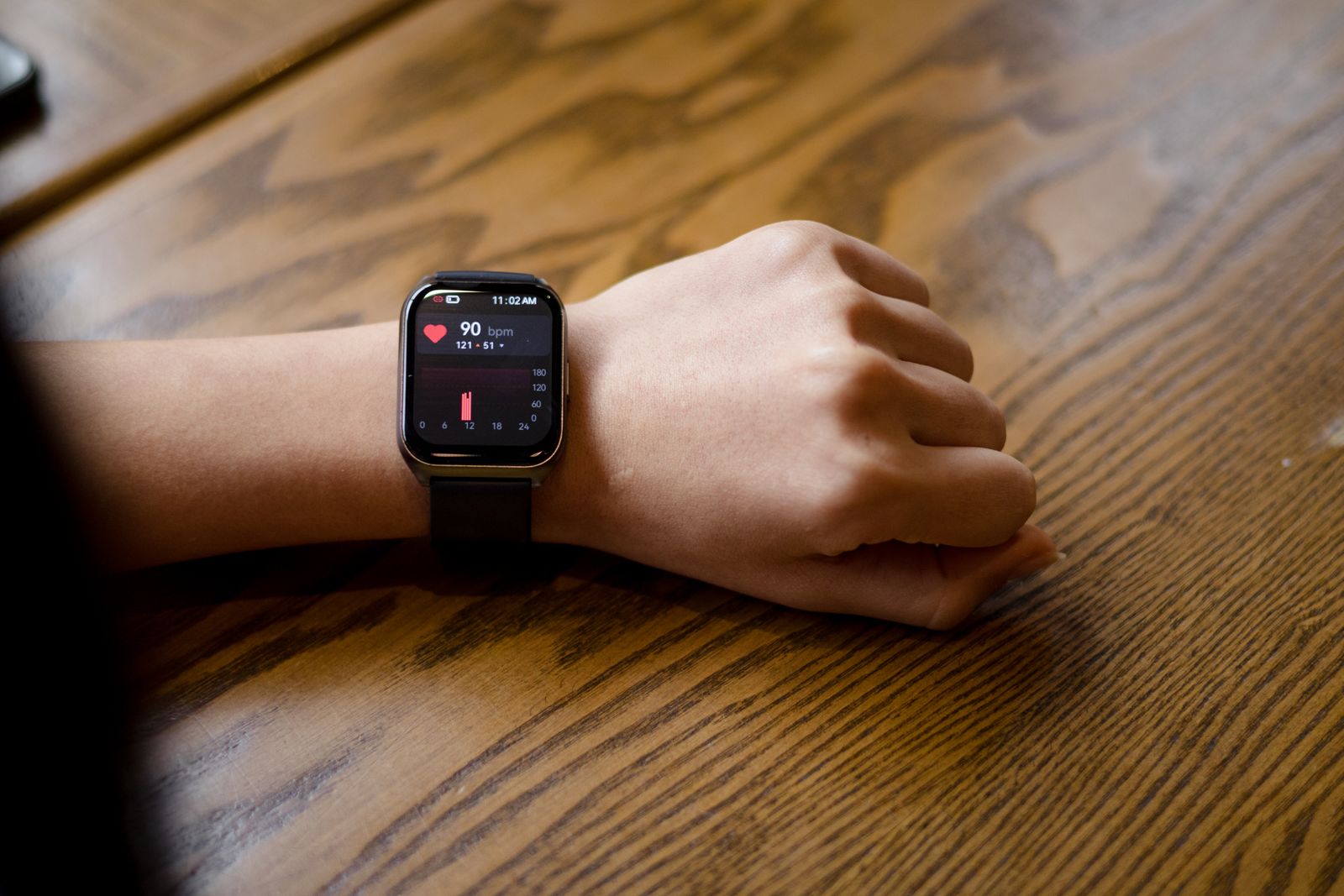
Are smartwatch VO2 max estimates accurate? They use a similar heart-rate-based logic, often combined with GPS pace data, and tend to be reasonably consistent for tracking your own trend over time, even if the absolute number differs somewhat from a lab test.
What’s considered a “good” VO2 max? It varies enormously by age and sex, with elite endurance athletes reaching 70-85 mL/kg/min and average untrained adults often in the 30-40 range. Trend over time matters more than comparing your number to a generic chart.
Can VO2 max decline with age be reversed? VO2 max does decline with age, but consistent aerobic training can meaningfully slow that decline and, in previously untrained people starting a program, can noticeably raise it regardless of age.
What VO2 Max Actually Measures
VO2 max represents the maximum rate at which your body can take in, transport, and use oxygen during intense exercise, and it’s widely considered the gold-standard measure of aerobic (cardiovascular) fitness in exercise science. It reflects a chain of physiological systems working together, lung capacity for oxygen intake, heart and blood vessel efficiency for oxygen transport, and muscle cell capacity (particularly mitochondrial density) for actually using that oxygen to produce energy, which is why VO2 max is considered such a comprehensive fitness marker rather than reflecting just one isolated system. True VO2 max is measured in a lab using specialized equipment during a graded maximal exercise test, but this precision comes at the cost of accessibility, which is why estimation formulas based on more practical, submaximal data (like resting heart rate, exercise heart rate at a known pace, or performance in a timed test) have become popular through fitness trackers and calculators.
These estimates are reasonably useful for tracking your own trend over time but carry meaningfully more error than a true lab test, particularly for people at the higher or lower ends of the fitness spectrum, where estimation formulas tend to be less accurate than for people in the middle of the typical fitness range the formulas were built around.
Why VO2 Max Has Become a Longevity Marker, Not Just a Fitness One
Beyond athletic performance, VO2 max has attracted growing attention in longevity and health research because multiple large studies have found it’s one of the strongest predictors of all-cause mortality risk available, in some research, a stronger predictor than traditional risk factors like smoking, diabetes, or high blood pressure. This has elevated VO2 max from a purely athletic performance metric to something increasingly discussed in general health and aging research, with some researchers advocating for it to be tracked as routinely as blood pressure, given how strongly it appears to predict long-term health outcomes.
It’s worth being appropriately careful about causation in this research: while the association between higher VO2 max and lower mortality risk is very well established, and there’s strong evidence that improving VO2 max through exercise does causally improve health, VO2 max itself is also partly influenced by genetics, meaning some of the association reflects both trainable fitness and some baseline genetic variation in aerobic capacity.
Improving Your Estimated VO2 Max
VO2 max responds well to training, particularly a combination of steady aerobic base training (Zone 2-style cardio) and higher-intensity interval training, which research suggests may produce complementary adaptations, base training improving the efficiency of oxygen delivery and utilization over time, and high-intensity work pushing the upper limits of cardiovascular capacity more directly. Improvements are genuinely achievable at any age and fitness level, with untrained individuals often seeing meaningful VO2 max improvements within a few months of consistent, appropriately structured cardiovascular training, making it a genuinely actionable health marker rather than simply a fixed number to be concerned about.
Sources
- “Estimation of maximal oxygen uptake using the heart rate ratio method,” National Library of Medicine
- American College of Sports Medicine
- American Heart Association
Final Thoughts
You don’t need a lab to get a useful, directional sense of your cardiovascular fitness — a resting heart rate reading and a bit of arithmetic gets you in the right neighborhood. What matters more than the exact number is the trend: if your resting heart rate is dropping and your estimated VO2 max is climbing over a few months of consistent training, that’s a real, meaningful signal of improving fitness.
About the Author
This article was written and reviewed by Ethan Brooks, focused on translating public health information into clear, practical guidance for everyday readers. If you spot an error or have a correction, please contact us.